

Collectible music cards are the way to engage with fans long term. Somewhere between 1996 and now, a strange thing happened: cardboard rectangles with pictures on them became one of the most emotionally powerful collecting categories on earth. A 1998 Pikachu Illustrator card sold for over $5 million. Vintage baseball cards regularly clear six figures at auction. Modern trading card companies sell out print runs in minutes, and grown adults line up outside Target at 6am for a chance at a “chase” pull.
None of that has anything to do with the music printed on the cardboard. It has everything to do with a set of psychological mechanics — rarity, collectibility, mystery, identity, and status — that the music industry mostly forgot to bring with it into the streaming era.
That’s the gap LEMN Drops is built to close.
Why Trading Cards Work: The Mechanics Behind the Obsession
Before we talk about music, it’s worth naming exactly what makes a piece of printed cardboard worth chasing. It’s not one thing — it’s a stack of reinforcing mechanics:
Rarity and print runs. A card’s value is inseparable from how few of them exist. “1st Edition,” “1/1,” “Numbered to 100” — these aren’t decoration, they’re the entire point.
Variants. The same character or player, reprinted in different colorways, foils, or alternate artwork, turns a single release into an entire universe to hunt through.
Blind boxes and mystery packs. Not knowing what you’re going to get is, counterintuitively, part of what makes people want it. The dopamine hit of the “pull” is a huge part of the format’s appeal — collectors will tell you the opening is sometimes better than the having.
Set completion. A single card is a nice object. A complete set — every player on the roster, every character in the expansion — is a project. It gives collectors a reason to keep coming back, keep spending, keep talking about what they’re missing.
Numbered editions and rarity scoring. “This is card #7 of 250” does something psychological that “this is a CD” never could. It converts a mass-produced object into a specific, individual thing that only you own.
Verifiable authenticity and resale value. The secondary market — grading, trading, reselling — only works because ownership and rarity can be trusted. A card’s value collapses instantly if it can be faked.
Identity and display. Collectors don’t just own cards, they display them, sleeve them, talk about them, and use them to signal who they are and what they love.
Every one of those mechanics is portable. None of them require the object to be a picture of a shortstop. They require scarcity, mystery, variation, completion, provenance, and pride of ownership — and a physical music format is just as capable of carrying all six as a piece of cardboard is.
The Physical Format Music Left Behind
For most of the last twenty years, physical music formats have stood still while collectible categories around them evolved dramatically. A CD is a CD. A vinyl variant might get a different colour of wax, but it rarely gets a rarity number, a mystery reveal, or a reason to come back and complete anything. Streaming, meanwhile, stripped ownership out of the equation almost entirely — you don’t own a stream, you rent access to one, and there’s nothing to hold, display, trade, or be proud of.
That leaves a real gap for artists and fans alike: fans who grew up trading cards and opening packs now have almost nowhere to bring that same energy to the music they love. LEMN Drops exists to give it back to them with collectible music cards.
How LEMN Drops Applies Collectible Card Mechanics to Music
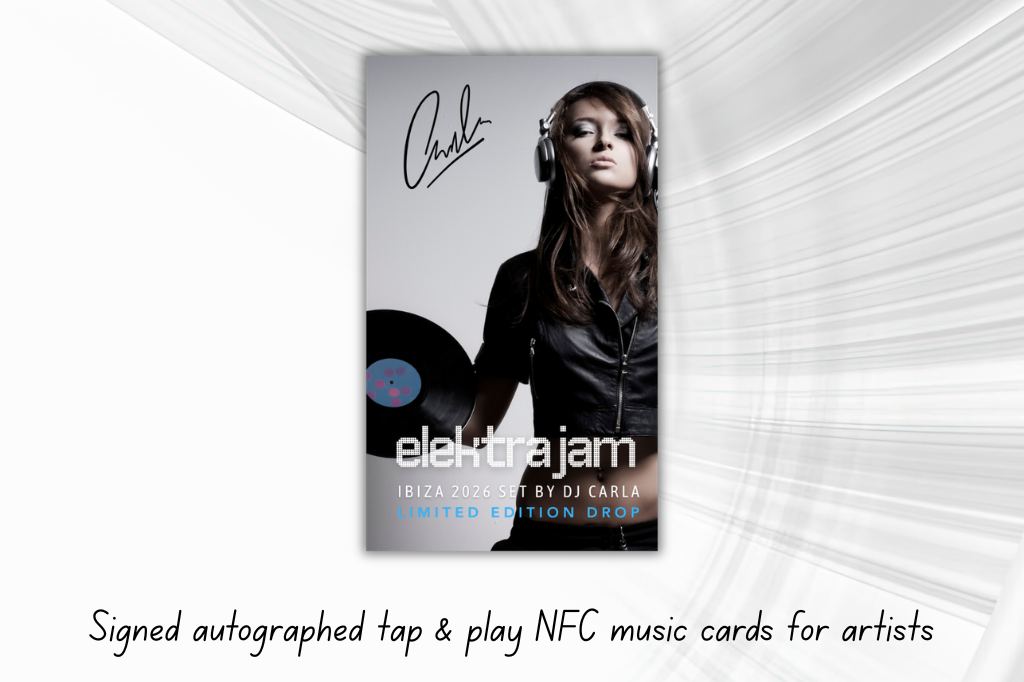
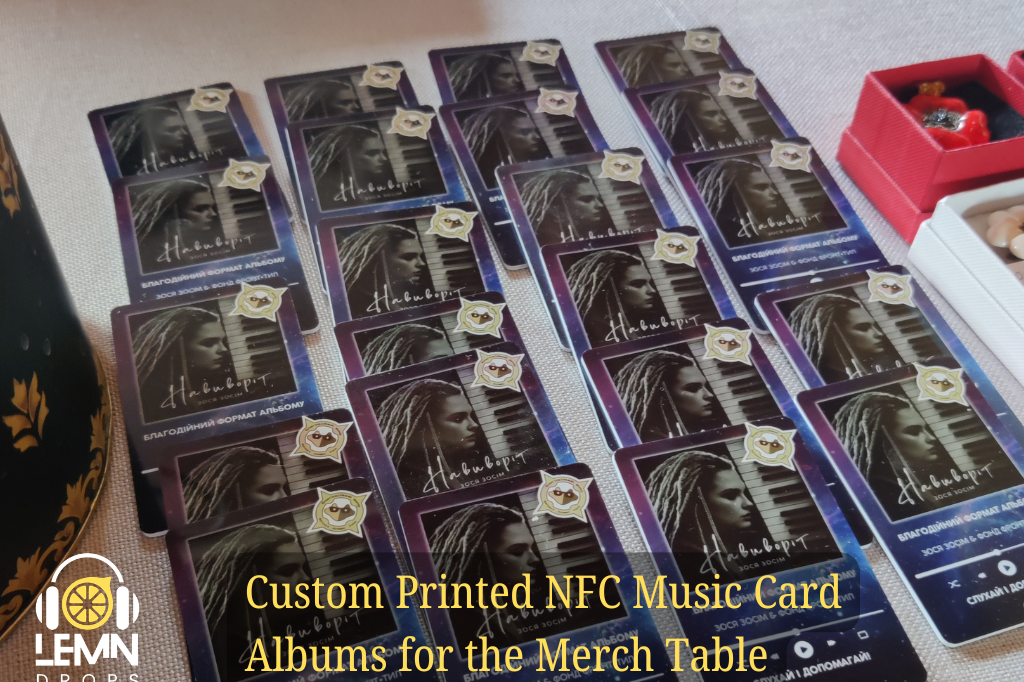
Each LEMN Drops card is a physical, NFC-embedded card that taps to stream a song or release directly — no app required. That alone makes it a genuinely new physical format, not a novelty add-on to an existing one. But the format only becomes a collecting experience once you layer in the mechanics that made cards like Pokémon and baseball collectibles so sticky. Here’s how that plays out in practice.
Limited edition variants and colourways
An artist doesn’t have to release just one version of a card for a single. They can release variant colourways, alternate cover art, or special-edition finishes for the same track — the same way a trading card company reprints a fan-favourite character in a foil or alternate-art version. Suddenly a single is not one release, it’s a small universe of things to collect.
Blind box drops
Instead of every fan getting the identical physical object, LEMN Drops can be sold as mystery packs — fans know they’re getting a card from a set, but not which variant, colour, or rarity tier until they tap it. That unboxing moment, so central to trading card culture, becomes part of how fans experience a music release for the first time.
Band member sets — “collect them all”
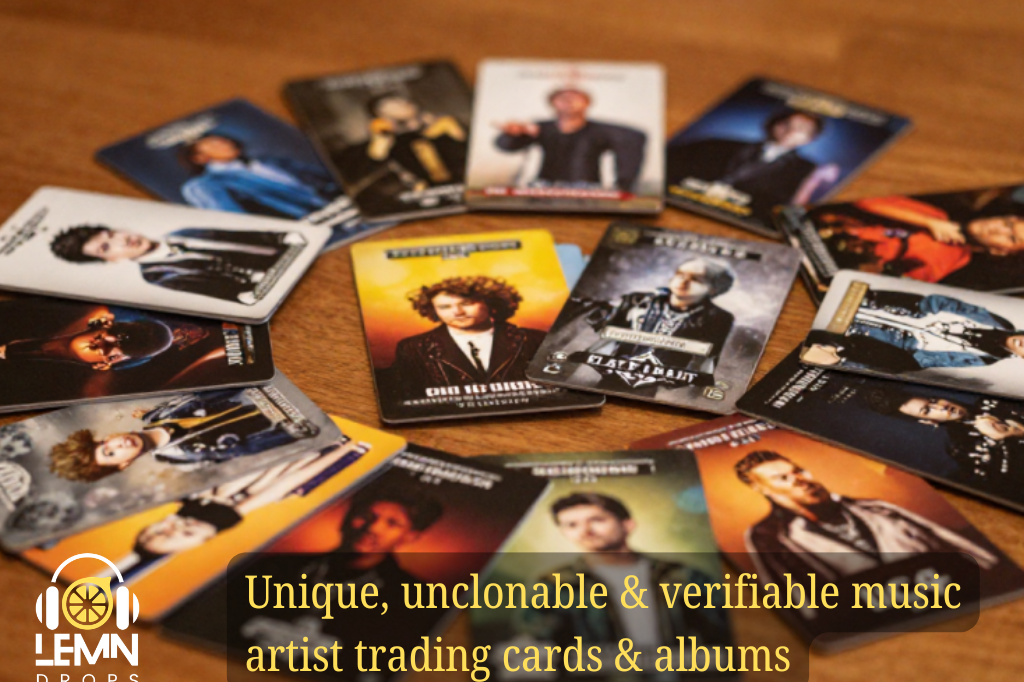
A four-piece band doesn’t need to release one card. They can release a set of four — one card per member, each with its own design, its own personality, its own piece of exclusive content behind the tap. Fans who want the full experience have a reason to track down every card in the set, not just grab one and move on. This is the same completionist pull that keeps a card collector coming back to finish an expansion.
Numbered editions and rarity scoring
Because every LEMN Drops card carries a secure NFC chip (NXP NTAG 424 DNA, AES-128 encrypted), each card can be assigned a genuine, verifiable serial number — “Card 12 of 200,” a specific rarity tier, or a “chase” ultra-rare version pressed in far smaller numbers than the standard run. Unlike a sticker or a printed number on a normal CD insert, this rarity is cryptographically backed. It can’t be faked or duplicated, which is exactly the property that makes trading cards trustworthy enough to trade and resell in the first place as collectible music cards.
Authenticated resale and secondary market value
This is where LEMN Drops’ connection to Qliktag’s anti-counterfeit and product authentication technology becomes a genuine differentiator rather than a technical footnote. Because ownership and authenticity are verifiable at the chip level, a LEMN Drops card can carry real resale confidence — a buyer on a secondary market can trust that the numbered, rare card they’re purchasing is the genuine article, not a reprint. That’s the exact mechanism that makes graded trading cards a real asset class instead of just a hobby.
Design and pride of display
Trading cards are built to be displayed — in binders, on shelves, in toploaders. A LEMN Drops card is built the same way: it’s a physical object with real design intention, meant to be held, shown, and talked about, not shoved in a drawer next to old cables the way a promo CD eventually is.
Why This Matters for Fans
For fans, this reframes physical music ownership from “a format to play music on” into “a thing to collect, chase, and be proud of” — much closer to how they already relate to sneakers, trading cards, or vinyl variants. A LEMN Drops card isn’t competing with Spotify for listening time; it’s offering something Spotify structurally cannot: a real, ownable, individually numbered object tied to the music they love, with a story about how rare and how theirs it is.
Why This Matters for Artists
For independent artists, this isn’t just a nicer merch table item — it’s a new mechanic for turning a single release into an ongoing collecting relationship with fans. A band can:
- Release a set around an album, giving fans a reason to buy more than one card
- Create scarcity intentionally, with numbered rare variants that reward the most dedicated fans
- Turn merch tables and online drops into “pack openings,” generating the same excitement collectors already associate with the format
- Build resale and secondary-market buzz that keeps a release relevant long after launch week, instead of it disappearing into the stream
None of this replaces streaming revenue — it sits next to it, as the same self-produced-CD-at-the-merch-table hustle independent musicians have always relied on, rebuilt for fans who grew up opening card packs instead of buying albums at a record store.
Designing Your Own LEMN Drops “Set”
If you’re an artist thinking about your next release as a collectible set rather than a single SKU, a few starting questions are worth sitting with:
- What’s the set? Is it one card per band member, one per track on an EP, or a small run of alternate covers for a single?
- What’s the chase? Is there one intentionally rare, numbered variant that gives your most dedicated fans something to hunt for?
- What’s behind the tap? Each variant can unlock something different — a different mix, a voice memo, unreleased footage — so completing the set is rewarded with more than just design variety.
- How do you reveal it? Selling as a blind pack versus a known SKU changes the entire emotional experience of the drop.
The format is flexible enough to support all of it, because unlike a CD or a t-shirt, a LEMN Drops card is designed from the ground up to carry exactly the mechanics that made collectible cards one of the most durable hobbies in the world.
LEMN Drops turns music releases into collectible, NFC-authenticated physical cards — no app required to stream. Curious what a set could look like for your next release? [Get in touch] to start designing yours.