

There is a moment that every independent musician knows. You finish a set at a small venue or club, the crowd is energised, a few people approach the merch table, and someone asks: “Do you have any music I can take home?”
For most indie artists today, the honest answer is: “You can find me on Spotify.”
But that is not the same thing. It is not even close.
This article is about reclaiming that moment — turning it into a genuine revenue opportunity, a fan connection, and a music sale you actually get paid for. It is about a format called the phygital music drop, and why it might be the most practical and exciting thing to happen to independent music sales at live events since the CD and vinyl.
What Is a Phygital Music Drop?
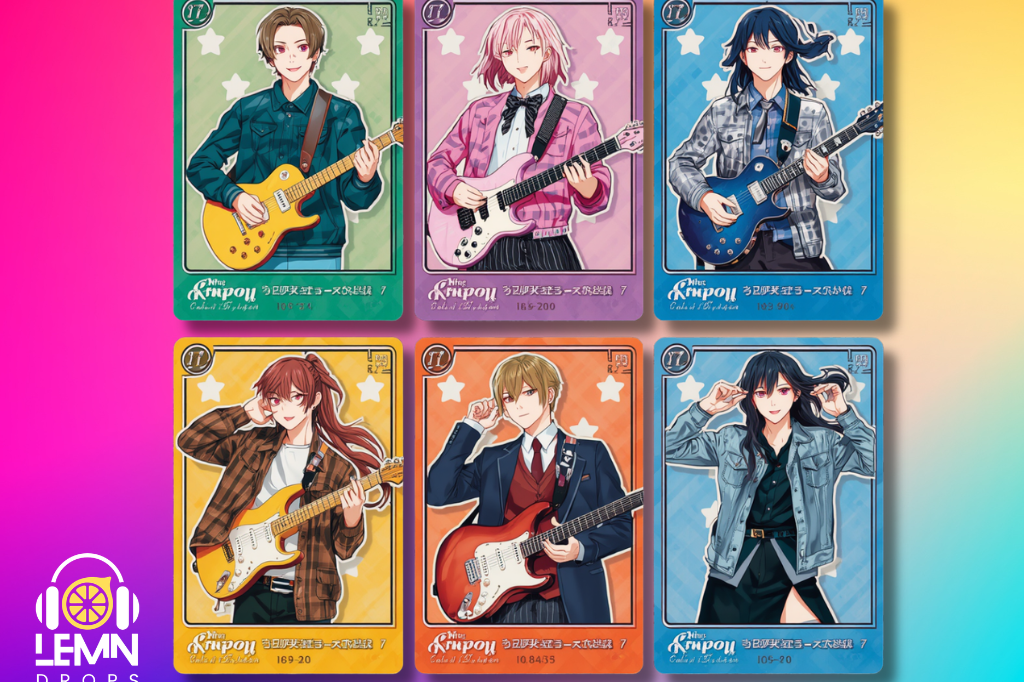
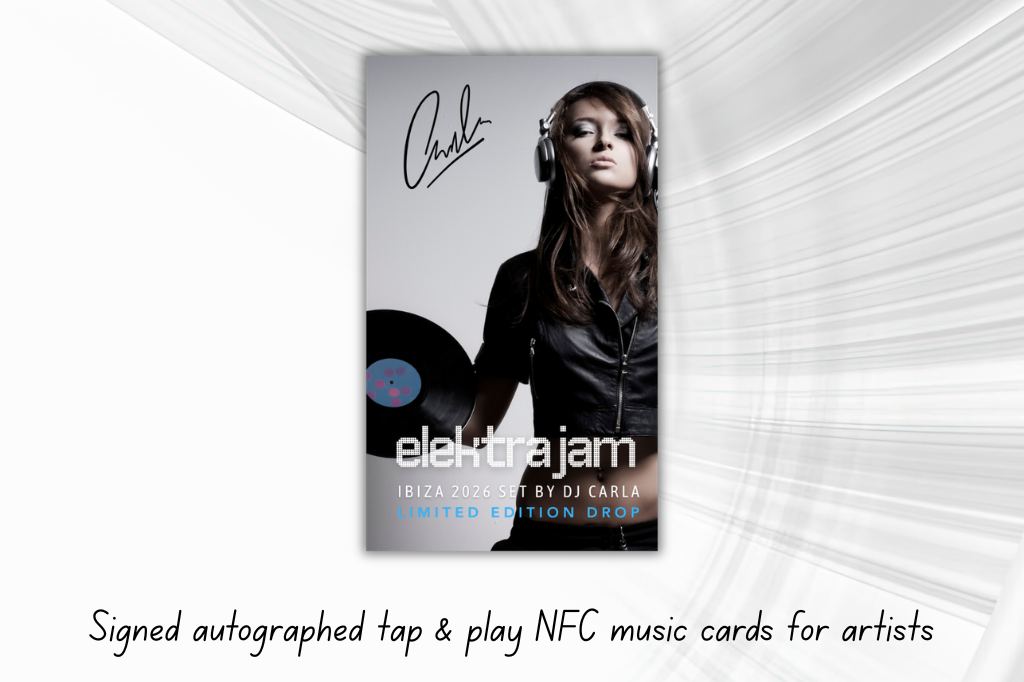
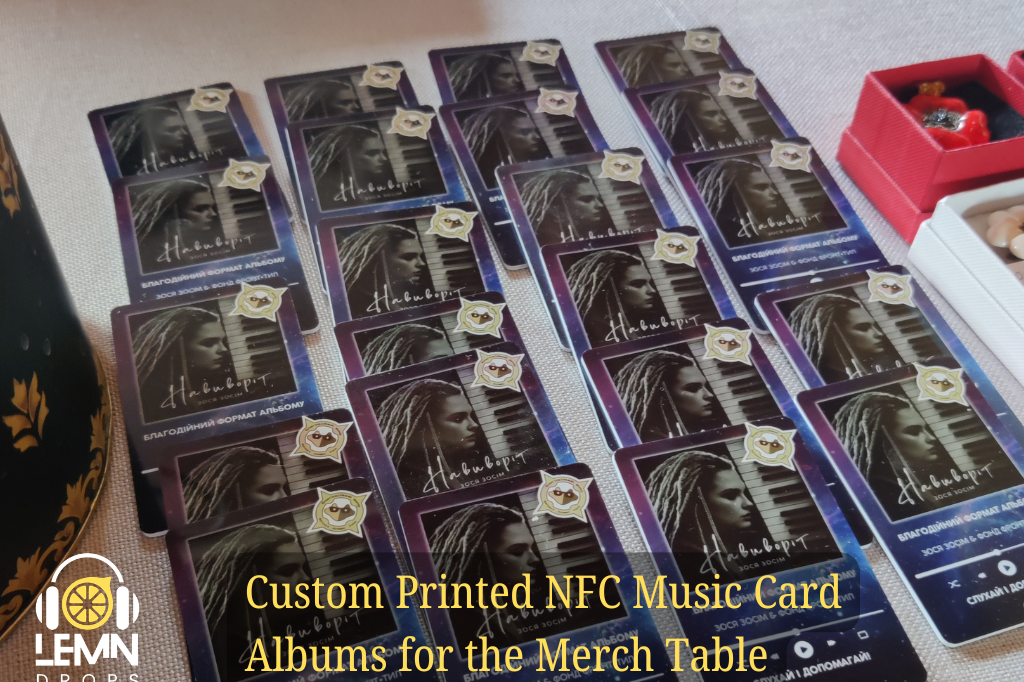
A phygital music drop is a physical, collectible NFC card that gives the buyer instant access to your digital music. The word “phygital” blends physical and digital — and that is exactly what these cards are. They look and feel like a premium collectible card, custom printed with your artwork, your artist name, your album or EP title. But when a fan taps the card against their NFC-enabled smartphone, your music streams instantly — no app download, no login, no link to copy and paste.
It is physical ownership of digital music. The best of both worlds.
At LEMN Drops, we have built a complete physical music distribution platform for independent musicians to create, print, and distribute their music this way. We help upload your tracks, artwork, lyrics, and credits. We encode everything securely onto custom-printed NFC cards using an unclonable authentication chip. You order the cards, sell them directly to fans — at gigs, shows, fan meetups, street performances, anywhere — and keep the revenue.
A Personal Story: The Moonstruck EP and the CD That Funded Everything
Before we get into the mechanics, let me share where this idea really comes from — because it is rooted in something that actually worked, long before streaming existed.
Back in the early 2000s, I was playing in a rock band called Moonstruck — a group of high school and college students who loved music and had absolutely no budget. We wanted to tour the local club circuit, travel to play gigs, build an audience, and do all the things bands are supposed to do. The problem was the same one every unsigned act faces: money.
So we did what felt natural at the time. We recorded an EP called Moonwalk, replicated it onto CDs ourselves, designed and printed our own CD inlays and artwork, and brought copies to every gig we played. We would sell them at the merch table for a few euros a piece — sometimes after our set, sometimes between songs, sometimes by just having them visible on a table near the door.
It worked. Not in a life-changing way, but in a real, practical way. Fans who liked what they heard wanted to take something home. They wanted to support us. They wanted to listen again later, in their car, on their stereo at home. The CD gave them a way to do that — and it gave us the funds to keep going.
That experience is the direct inspiration behind LEMN Drops.
Why That Model Still Works — and Why It Needs a Modern Format
The instinct behind selling CDs at gigs was sound then, and it is sound now. The problem is not the model — it is the format. CDs are increasingly obsolete. Most people under 30 do not own a CD player. Streaming has changed how people expect to access music, and that is not going to reverse.
But here is what has not changed: fans who connect with live music want to support the artist directly. They want something physical. They want something that feels intentional and personal, not a playlist add on a platform that pays the artist a fraction of a cent. The desire to own music — to hold something in your hands that represents your connection to an artist — did not disappear with the CD. It just went dormant, waiting for the right format.
That format is the phygital music drop.
A LEMN Drop NFC music card plays to exactly how the current generation of music listeners actually behaves. They stream everything on their smartphones. They listen through earbuds. They are comfortable tapping their phone to pay, to share content, to access experiences. But they are also increasingly aware that streaming pays artists almost nothing, and many of them — particularly the kind of dedicated fan who comes to a live show — actively want a better way to support the musicians they love.
A physical card they can tap and play is intuitive to them. Collecting it feels meaningful. And knowing that whatever they pay goes directly to the artist, not into a streaming platform’s revenue pool, makes the purchase feel good.
The Live Event Revenue Opportunity: A Real-World Scenario
Let us walk through what this looks like in practice.
Imagine you are an independent artist or a band. You have recorded an EP — five tracks, original artwork, something you are proud of. You create a LEMN Drop on the platform: upload your tracks, fill in your track names, lyrics, and credits, add your artwork, and configure your drop as a limited edition of, say, 100 cards.
You order 100 LEMN Drop NFC cards at approximately €3 per card.
Your production cost: €300.
You bring those cards to your next five gigs. At each show, you have 20 cards on the merch table, priced at €8 each — a fair, accessible price point that feels like a small but meaningful purchase for a fan who just watched you perform.
Here is what the numbers look like:
| Cards Sold | Sale Price | Revenue | Production Cost | Net Profit |
|---|---|---|---|---|
| 25 cards | €8 each | €200 | €75 (25 × €3) | €125 |
| 50 cards | €8 each | €400 | €150 (50 × €3) | €250 |
| 100 cards | €8 each | €800 | €300 (100 × €3) | €500 |
Selling 100 cards across a handful of shows — a very modest target for an artist with a genuine live fanbase — nets you €500 in direct revenue from a single release.
Now compare that to Spotify.
At Spotify’s average payout of approximately €0.003 per stream, you would need roughly 167,000 streams to earn the same €500. Not streams of your album. Streams of individual tracks. And that assumes you reach the algorithmic visibility needed to generate that volume in the first place — which the vast majority of independent artists never do.
Selling 100 physical cards at a live event is not just more profitable. It is more realistic, more human, and more satisfying for both you and your fans.
Where You Can Sell LEMN Drop Cards
The beauty of a physical product is that it sells wherever you are. Here are the most natural places to bring your LEMN Drop cards:
Live concerts and venue shows — Your merch table is the most natural home for a LEMN Drop. Fans who have just watched you perform are at peak emotional connection. This is the ideal moment to offer them something to take home. A physical card at €7–€10 sits at an accessible impulse-purchase price point alongside t-shirts, posters, and other merch.
Small club gigs and residencies — Even at intimate shows with audiences of 20–50 people, a handful of card sales per night adds up across a season. Regular venue gigs build a local fanbase that grows with you.
Fan meetups and listening parties — Hosting a dedicated listening event for your new EP? A limited edition LEMN Drop card makes perfect sense as a souvenir and access pass combined.
Street performances and busking — For artists who perform in public spaces, a LEMN Drop card is a low-friction way for passersby to take your music with them. A QR code or small sign explaining the tap-to-play mechanic is all you need.
Pop-up markets and record fairs — Music markets, craft fairs, and independent record events are growing in popularity across Europe. A LEMN Drop display stand at a market stall bridges the gap between the vinyl resurgence crowd and the digital native audience.
Support slots and festival sets — Playing a support slot or a festival stage puts you in front of new audiences who have never heard of you. A card sale is a much more powerful follow-up than a Spotify follow because it represents a real financial commitment from a new fan.
Online via your own website — LEMN Drops are not limited to in-person sales. Share a link, post on social, sell through your own store. The physical card ships to the fan, who taps it to play when it arrives.
The Fan Experience: Why This Resonates with the Streaming Generation
There is an important psychological dimension to the phygital music drop that makes it particularly powerful right now.
The current generation of music fans has grown up with streaming. They have access to virtually every song ever recorded, instantly, for €10 a month. Music is abundant to the point of being almost weightless. Algorithmic playlists have replaced intentional listening. Most people cannot tell you the name of the last album they really sat down and listened to, start to finish, with full attention.
The LEMN Drop card offers something that feels genuinely different: intentionality.
When a fan purchases your card, they are making an active choice. They are choosing your music. They are paying for it directly. They own something physical that represents that choice — something they can hold, display in a collection, hand to a friend. When they tap it and listen, it is a conscious act, not background music served by an algorithm.
This is the listening experience that vinyl collectors and cassette enthusiasts have been describing for years. The LEMN Drop translates that same intentionality into a format that works with a smartphone — the device everyone already carries.
For the independent artist, this is not just a revenue stream. It is the foundation of a real listener community: people who chose your music, paid for it, and own a physical reminder of that connection.
Building a Community, Not Just a Fanbase
The most important thing about selling music directly at live events is what it represents beyond the transaction.
Every fan who buys a LEMN Drop card is not just a streaming listener — they are a supporter. They made a real choice to invest in your music with their own money. That is a fundamentally different relationship than a Spotify follow or a playlist add.
These are the fans who come back to your next show. Who tell their friends. Who post about their card on social media. Who show up to the listening party you host for your next release. Building even a small community of 50–100 people who have directly paid for your music is worth more to an independent artist’s long-term career than 100,000 passive streams from listeners who will never know your name.
Releasing music as a phygital drop and selling it live is a strategy for independence in the truest sense: independence from algorithms that decide who gets heard, independence from streaming platforms that pay artists almost nothing, and independence from gatekeepers who determine whose music is worth promoting.
You play. You connect. You sell. You build.
That is what Moonstruck was doing with a stack of homemade CDs at a club gig in the early 2000s.
And it is exactly what LEMN Drops is built to help independent artists do today.
Ready to Create Your First Phygital Music Drop?
Whether you are releasing your first single or your latest full-length album, LEMN Drops gives you a physical release format that fans will love to collect and carry.
Visit lemn-drops.com to create your first phygital music drop and order your custom NFC music album cards.