

Let’s be honest about something that most music industry articles still dance around.
For the vast majority of independent musicians, streaming is not a business model. It is a promotional channel that happens to pay a tiny amount of money. The promise that an artist could upload their music to Spotify, build a following, and sustain a career from streaming royalties alone and make money as a musician has not materialised for the overwhelming majority of independent artists — and the economics suggest it never will.
This does not mean the music industry is dead. It means the revenue map has changed. And if you know where to look, there are more ways than ever to how to make money as a musician in 2026— especially if you play live.
This is the complete guide to how independent musicians and music artists can generate sustainable revenue in 2026, from the obvious to the overlooked — with a particular focus on the physical music distribution revival and a newer format that is quietly becoming one of the most practical direct-to-fan revenue tools available to independent artists today.
Why Streaming Alone Will Never Pay Most Artists
Before we get into solutions, it is worth understanding the scale of the problem clearly.
The average Spotify payout to artists is between €0.003 and €0.005 per stream — and that is before the distributor takes their cut. To earn the equivalent of a minimum wage around €1,134, you would need approximately 378,000 streams in a single month. Every month. Consistently.
For context, the vast majority of tracks on Spotify receive fewer than 1,000 streams total — ever.
The model was not designed to sustain independent artists. It was designed to make catalogue music accessible at scale. The artists who benefit meaningfully from streaming revenue are those with millions of monthly listeners — a vanishingly small percentage of working musicians.
Meanwhile, the music you make costs real money to record, mix, and master. The time you invest has real value. And the emotional connection your fans feel when they see you perform live is genuinely worth paying for.
The question is not whether you should be on streaming platforms. You should — they serve a discovery purpose. The question is where your actual revenue comes from. And that answer is almost certainly not going to be streams.
The Full Revenue Map: How Musicians Actually Make Money
Here is the honest picture of how independent artists build sustainable income in 2026. The best strategies combine multiple streams — but not all of them are equal, and some are far more accessible than others depending on where you are in your career.
1. Live Performances — Your Most Reliable Revenue Engine
For most independent artists, live performance is the foundation of everything. A gig, a DJ set, a concert, a festival slot, an open mic residency — these are the moments where music generates real money in real time.
The challenge is that live revenue has also become fragmented. Venues take a door percentage. Ticketing platforms take their fee. Promoters take theirs. After a night that drew 80 people, the artist might leave with less than they expected.
But here is what live performance does that nothing else can: it puts you in the same room as people who are already emotionally connected to what you do. That is the most commercially powerful position an artist can be in — and most never fully capitalise on it because they are not selling anything beyond a ticket.
How to maximise live revenue:
- Negotiate your guarantee or door split clearly before every show
- Build relationships with venues for residencies rather than one-off bookings
- Use every live show as an opportunity to sell something directly to fans (more on this shortly)
- Play varied formats — headline shows, support slots, corporate events, private functions — each has different pay structures
2. Merch Sales — The Backbone of Independent Artist Income
Ask any touring independent musician what keeps them financially afloat and the answer is almost always the same: merch.
T-shirts, hoodies, caps, tote bags, posters, prints — the merch table has been the financial backbone of independent music for decades because it is one of the few revenue streams where the artist keeps the majority of what they earn. A hoodie that costs €12 to produce, sold for €35, puts €23 directly in your pocket with no algorithm involved.
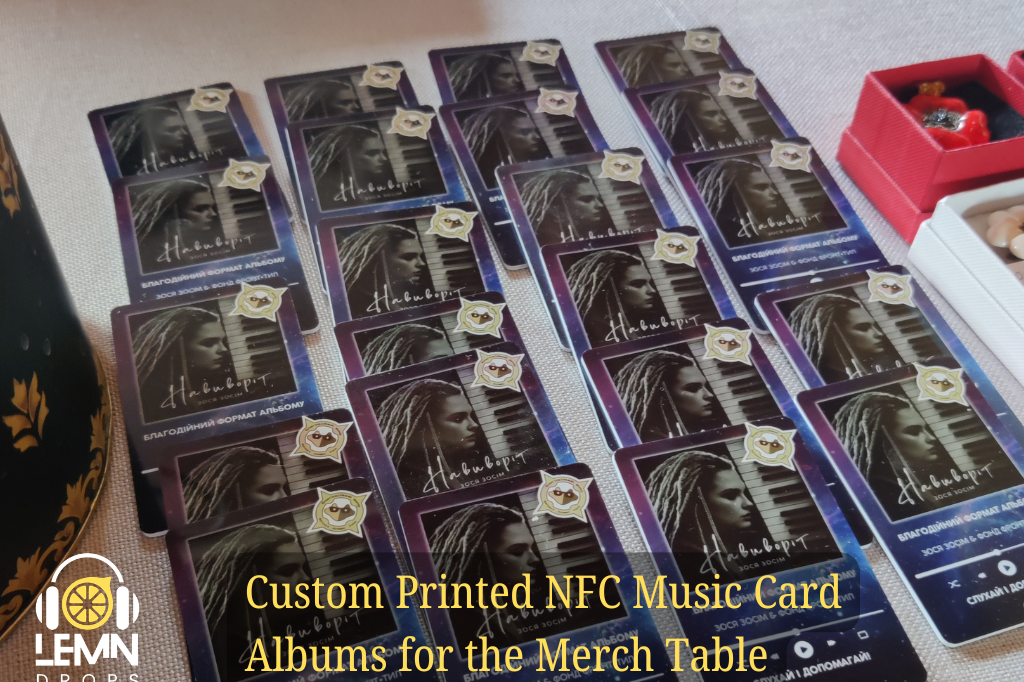
The most important thing about merch is placement. Fans at live shows are at peak emotional connection and peak willingness to spend. A visible, well-presented merch table at every show — not tucked in a corner, not unmanned — consistently outperforms online merch store sales many times over.
Merch that works best at live events:
- Wearables with strong design (people wear what they are proud to wear)
- Limited edition or tour-specific items (scarcity creates urgency)
- Low-cost entry items like stickers and badges that capture every budget level
- Signed items that create personal connection and collector value
3. YouTube Content Revenue
YouTube remains one of the few digital platforms where independent creators can build meaningful passive income over time — through ad revenue, channel memberships, Super Thanks, and the algorithmic discovery that comes from consistent content.
The key for musicians is that YouTube rewards consistency and authenticity far more than production value. A weekly practice session, a cover song, a behind-the-scenes studio vlog, a gear review — these formats build audiences that streaming platforms cannot, because they build a relationship with you as a person, not just a catalogue.
YouTube Partner Program eligibility requires 1,000 subscribers and 4,000 watch hours, after which ad revenue begins. For music channels, this typically generates modest income initially — but the compound effect of an established YouTube presence on all other revenue streams (live bookings, merch, direct music sales) is significant.
4. Sync Licensing — Music for Film, TV, Games, and Advertising
Sync licensing — placing your music in films, TV shows, video games, podcasts, advertisements, or online content — is one of the highest-paying and most underutilised revenue streams for independent artists.
A single sync placement in a mid-budget television series can generate thousands of euros in licensing fees, plus ongoing performance royalties every time the episode airs. Advertising placements can pay even more.
Getting sync placements requires registering your catalogue with a performing rights organisation (SGAE in Spain, PRS in the UK, ASCAP or BMI in the US) and either pitching directly to music supervisors or working with a sync licensing agency or library.
5. Teaching, Workshops, and Music Education
Your musical knowledge has monetary value beyond your performances. Private instrument lessons, songwriting workshops, music production masterclasses, online courses — all of these are the ways how to make money as a musician from your expertise rather than your catalogue.
Online platforms like Lessonface, TakeLessons, and even direct Zoom-based teaching make it easier than ever to build a teaching income that complements performing income without requiring you to be in the same city as your students.
6. Sponsorships and Brand Endorsements
As your profile grows — particularly if you build a presence on social media or YouTube — brand partnerships and endorsements become an option. Instrument manufacturers, music software companies, recording equipment brands, and lifestyle brands aligned with your audience are the most natural partners for musicians.
These deals range from gifted products and affiliate commissions at the entry level, through to paid partnership fees for established artists with significant audiences.
7. Crowdfunding and Fan Support Platforms
Platforms like Patreon, Ko-fi, and Bandcamp allow fans to support artists directly through subscriptions, one-time payments, or pay-what-you-want purchases. For artists with a genuine community — even a small one — these platforms can provide consistent, recurring income that is completely independent of streaming performance.
The key to crowdfunding success is making the value exchange clear: exclusive content, early access, behind-the-scenes access, or physical items in exchange for ongoing support.
8. Session Work and Collaboration
Playing sessions for other artists, contributing to recordings, co-writing for other musicians’ projects — session work is a reliable income stream for skilled musicians that often gets overlooked in favour of purely self-driven projects.
Session fees vary widely by market and format, but regular session work can provide financial stability that allows you to invest in your own projects with less financial pressure.
The Physical Music Revival: Why Fans Want to Own Music Again
Now for the part that is changing fastest — and where the most interesting opportunity for independent artists currently lives.
Physical music is back. Not as nostalgia, not as a niche collector’s market, but as a genuine mainstream revenue stream that is growing every year.
Vinyl revenue reached $1.4 billion in the United States alone in 2024, representing 71% of all physical music sales. CD sales are climbing again, particularly among younger listeners who are rediscovering the format. Cassette sales, while still a fraction of the market, have grown consistently for over a decade, driven by independent artists and micro-labels who value their affordability and DIY character.
The reason for this revival is not purely nostalgia. It is something more interesting: intentionality.
In a world of infinite streaming, where every song ever recorded is available for €10 a month, music has become weightless. Algorithmic playlists mean most people cannot name the artist behind a song they have heard a hundred times. The act of choosing music — of paying for it, owning something physical, deciding what to listen to rather than accepting what an algorithm serves — has become genuinely countercultural.
Fans who attend live shows and buy physical music are not passive listeners. They are active supporters. And research consistently shows that 75% of fans who buy physical music do so specifically to support the artist — not because they need a physical object to play the music.
That is the market LEMN Drops was built for.
The New Physical Format: Phygital Music Cards and the LEMN Drop
Here is where the physical music distribution meets the reality of how people actually listen to music in 2026.
Vinyl is beautiful. But it costs anywhere from €15 to €30 per unit to press in a small independent run, requires a specialist pressing plant with lead times of several months, and can only be played on equipment that the majority of your fans under 35 do not own.
CDs are more accessible but carry the cultural weight of being “outdated” in the minds of younger audiences — the same demographic that is otherwise enthusiastic about physical music in other formats.
Cassettes have genuine charm and a strong DIY culture around them, but again require a player that most people do not carry with them.
What if there were a physical music format that was affordable to produce, required no specialist playback equipment, worked instantly on the device that is already in every fan’s pocket, and still had the collectible, ownable, touchable quality that makes physical music meaningful?
That is the LEMN Drop.
What Is a LEMN Drop?
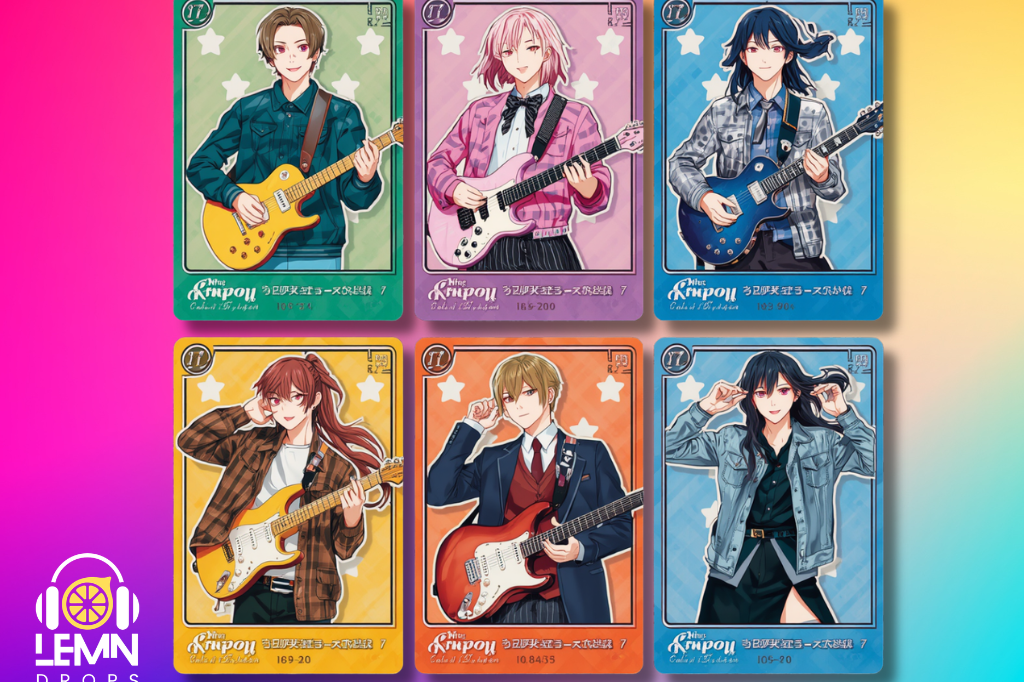
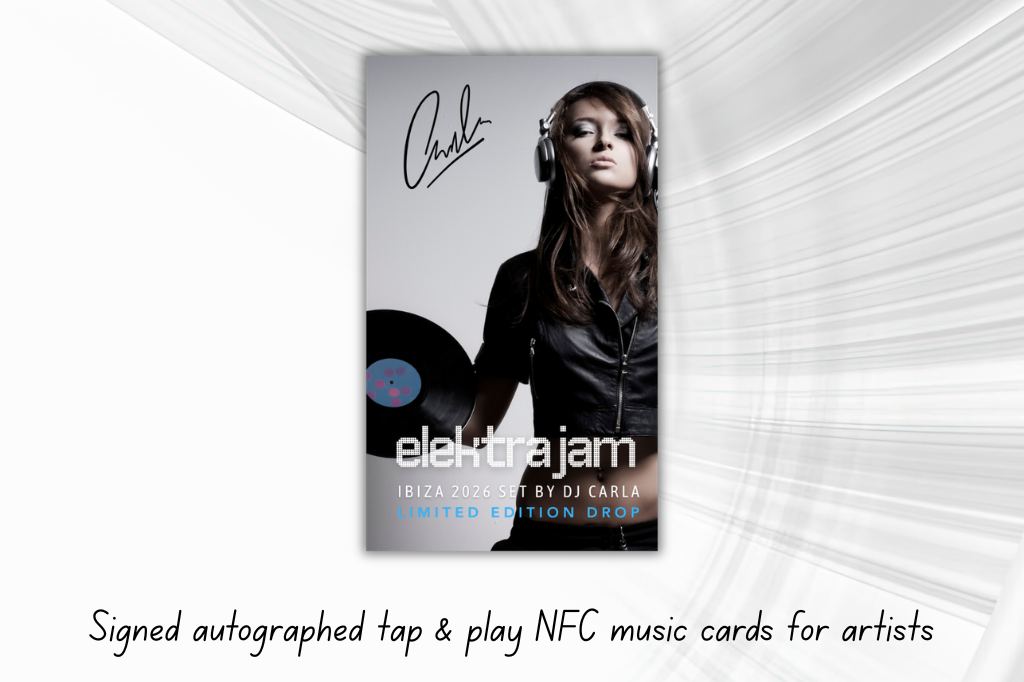
A LEMN Drop is a custom-printed, collectible NFC music card — the same size as a bank card — that gives fans instant access to your music when they tap it against any NFC-enabled smartphone. No app download. No streaming account. No password. Just tap and listen.
The card is fully custom printed with your artwork. It can carry a single track, a four-song EP, or a full album of up to 12 tracks. It is encoded with a unique, secure access link using an unclonable NFC authentication chip — the same technology used in modern banking cards — so your music cannot be copied, shared, or counterfeited.
You order your cards through lemn-drops.com, upload your music and artwork through the Music Drop platform, and the cards are printed, encoded, and shipped to your door, ready to sell.
The Revenue Model: Why This Works Especially Well at Live Events
Here is where the LEMN Drop becomes genuinely compelling as a revenue strategy for independent artists who play live.
Cards cost approximately €3 each to produce. You set your own sale price — most artists sell at live events for €7 to €10 per card. On a €8 sale price with a €3 production cost, you make €5 on every single card sold. Every euro of that profit goes directly to you, with no streaming platform, no distributor, and no algorithm involved.
Let us look at what this means across a realistic live event scenario:
Scenario: Independent artist, regional gigging circuit, 6 shows over 2 months
| Show | Audience | Cards Sold (est. 15%) | Revenue (€8/card) | Production Cost | Net Profit |
| Club gig | 60 | 9 | €72 | €27 | €45 |
| Festival set | 200 | 30 | €240 | €90 | €150 |
| Headline show | 100 | 15 | €120 | €45 | €75 |
| Support slot | 80 | 12 | €96 | €36 | €60 |
| Open mic | 40 | 6 | €48 | €18 | €30 |
| DJ set | 150 | 22 | €176 | €66 | €110 |
| Total | 630 | 94 cards | €752 | €282 | €470 |
€470 in direct music revenue from six shows — modest gigs by most measures, with conservative sales estimates. No streaming involved. No waiting 90 days for a royalty statement. Revenue collected the same night.
Compare that to what 94 fans streaming your music would generate on Spotify. If each fan streams your album 10 times — an optimistic assumption — that is 940 streams at roughly €0.003 each: €2.82 in streaming revenue.
The difference is structural, not marginal.
Why Fans at Live Shows Buy LEMN Drop Cards
The live show environment is uniquely powerful for physical music distribution for a reason that goes beyond marketing or sales technique. It is about emotional state.
A fan who has just watched you perform is not a passive audience member. They are activated — emotionally engaged, physically present, connected to the music they just experienced in real time. That state of connection creates genuine willingness to invest, which is why the merch table after a great show can generate more revenue in 30 minutes than an artist’s entire streaming catalogue earns in a year.
When you add a LEMN Drop card to that merch table, you are answering the most common question fans ask after a live show: “Where can I find your music and support you?”
A streaming link is not an answer to that question. It is a deferral. A physical card they can take home, tap on their phone, and listen to immediately — that is an answer. And it is one that puts money in your pocket directly, tonight, in cash or card payment at the table.
The card also extends the post-show experience in a way that streaming cannot. A fan who buys your LEMN Drop card goes home, taps it, and listens to your album properly — maybe for the first time — with the emotional memory of the live show still fresh. That is when a casual fan becomes a genuine supporter. That is when the relationship that will bring them back to your next show gets cemented.
Who Is the LEMN Drop Format Ideal For?
While any independent artist can benefit from releasing music as a LEMN Drop, the format is particularly well-suited to artists who:
Play live regularly — gigs, club nights, DJ sets, open mics, acoustic sessions, festival slots, support acts. Any format where you are physically in front of an audience creates a natural sales moment.
Are releasing new music — a new single, EP, or album release is the ideal moment to order a limited edition LEMN Drop. The card becomes part of the launch, creating scarcity and collector appeal around the release.
Already sell merch — if you have a merch table, adding a LEMN Drop card is straightforward. It fills the gap between your clothing and accessories by putting the music itself on the table.
Want to move away from streaming dependency — if you are frustrated by streaming payouts and want to build a revenue model that puts you in direct control, LEMN Drops offers a viable alternative that works with your live performance schedule.
Are in genres with strong physical music culture — indie, rock, alternative, folk, hip-hop, electronic, jazz, punk, metal. All have audiences that actively value physical music ownership and direct artist support.
Limited Editions and the Collector Appeal
One of the most powerful aspects of the LEMN Drop format is the ability to create genuine scarcity.
When you press 500 vinyl records, you have 500 copies to sell — but vinyl does not inherently communicate its edition size to the buyer. When you release 50 LEMN Drop cards numbered 1 to 50, every card holder knows they own something rare. That collector dimension adds perceived value that justifies a higher price point and creates urgency at the point of sale.
Limited edition releases also give you a reason to return to the merch table conversation at every show: “We only have 12 of these left” is one of the most effective things you can say at a merch table. It is true, it creates urgency, and it rewards the fans who commit early.
Putting It All Together: A Revenue Strategy That Actually Works
The most financially sustainable independent music careers are built on multiple revenue streams that reinforce each other. Here is how to make money as a musician and how a realistic combined strategy looks in practice:
Foundation layer (consistent income): Live performance fees + music merch sales at every show
Physical music layer (direct fan revenue): LEMN Drop NFC music cards sales at every live event, online through your own store, and at fan meetups — generating direct per-unit profit on every release
Content layer (audience building + passive income): YouTube channel, social media presence, building a community that makes every subsequent release easier to sell
Licensing layer (occasional high-value income): Sync placements registered through your performing rights organisation
Support layer (community revenue): Patreon, Bandcamp, or Ko-fi for fans who want to support you directly beyond individual purchases
Streaming (discovery, not income): Keep your music on streaming platforms for discoverability, but do not depend on it for meaningful revenue
The key insight is that streaming sits at the discovery end of this model, not the revenue end. Its job is to bring people to your shows, your social channels, and eventually your merch table — where the real revenue lives.
Getting Started With Your First LEMN Drop
If you are playing live and want to add a physical music product to your revenue mix before your next show, the process is straightforward.
Visit lemn-drops.com and place an order for your NFC music cards through the online shop, uploading the custom artwork that will be printed on them. Once your order is confirmed, create your Music Drop on the platform — uploading your tracks, lyrics, artist bio, and credits. LEMN Drops handles the encoding, printing, and delivery. Your cards arrive at your door ready to sell.
There is no ongoing subscription, no per-stream fee, and no revenue share on your sales. Your production cost is in the cards. Everything above that is yours.
If you have questions about how many cards to order, how to price them for your audience, or how to present them at your merch table, the LEMN Drops team is available to help — just reach out through the website and we will guide you through your first release.
The Bottom Line for Independent Musicians in 2026
Making a living from music as an independent artist has never been straightforward. The streaming era made it feel like it might become easier — infinite distribution, global reach, no physical manufacturing costs. Instead, it created a system where the economics systematically favour the platforms over the artists.
The artists who are building sustainable incomes today are the ones who treat streaming as one part of a diversified revenue strategy rather than the whole picture. They play live. They sell merch. They build communities. They find ways to sell their music directly to fans who want to support them.
Physical music distribution — in whatever format suits their audience — is part of that picture for more and more independent artists every year. Vinyl for the collectors. Cassettes for the DIY underground. And now, LEMN Drop NFC music cards for the artists who want a physical release format that meets digital-native fans exactly where they already are.
Your music is worth more than €0.003 per stream. There are fans at your shows who would happily pay €8 for a card they can tap and play right now. Give them the chance.
Visit lemn-drops.com to create your first Music Drop and order your custom NFC cards.
Have questions? Reply to us directly at lemn-drops.com and our team will help you plan your first release.