

You just played a great show. The crowd was into it, people lingered after the last song, and a handful of fans made their way to your table. But you walked away with less cash than you expected — and a pile of t-shirts you’re now hauling back to your car wondering how to sell merch at gigs the right way.
Sound familiar?
Knowing how to sell merch at gigs is one of the highest-earning opportunities an independent musician has. It doesn’t require a label, a distributor, or an algorithm to work in your favour. It’s just you, your fans, and a table between you. But most independent artists are leaving serious money on that table — literally — because they haven’t thought through the setup, the product mix, or how people actually buy in 2026.
This guide covers everything: what to sell, how to price it, how to set up a table that converts, how to handle payments, how to deal with venue merch cuts, and — importantly — what forward-thinking independent artists are now using to replace the dusty CD stack that nobody wants to carry home anymore.
Why Merch at Gigs Matters More Than Ever
Streaming pays fractions of a penny per play. For most independent artists, a month of streaming revenue doesn’t cover the cost of a single rehearsal. Merch at live shows is a completely different story.
A t-shirt that costs around $7–8 to produce can sell for $30–35 at a gig, leaving you with $22–28 profit per unit. At a 200-person show where just 15% of the audience buys something, that’s potentially $700–800 from merch alone — before you’ve counted a single ticket or performance fee. At the club touring level, merch can account for anywhere from 30% to 50% of total tour revenue, and for artists playing low-guarantee shows, it can be even higher.
The other reason live merch matters is less financial and more human: a fan who buys something from your table is making a commitment. They’re not just streaming you on shuffle — they’re taking a piece of the experience home. That connection is worth more than any algorithm can quantify.
Step 1: Choose the Right Merch to Sell at Shows
Not all merch is equal at a gig. You’re dealing with people who are slightly warm, maybe a drink in hand, who have to carry whatever they buy for the rest of the night. That shapes what sells.
What works well at live shows:
- T-shirts — Still the backbone of any merch table. Keep sizes stocked (don’t run out of mediums and larges), and make sure the design is something people would actually wear in their daily life, not just at your shows. Wearable merch is walking advertising.
- Hats and beanies — High margin, compact, and easy to carry. People often pick these up when they decide against a shirt.
- Stickers and pins — Low price point ($3–5), almost zero barrier to buying, and great for first-time fans who don’t know you well yet. Think of these as your entry-level product.
- Posters — Work particularly well at emotionally charged shows. Signed posters significantly increase perceived value.
- Physical music — This one needs its own section (see below), because the format matters enormously.
What doesn’t work as well: Bulky or awkward items that are hard to carry. Anything overly niche or inside-joke-only that only your most dedicated fans will get. Too many options — a table with 20 different SKUs creates decision paralysis. Keep it focused.
Step 2: Rethink Your “Physical Music” Offering
This is where most independent artists are either stuck in the past or missing a genuine opportunity.
CDs are largely dead at the merch table. Younger fans often don’t have CD players at home, in their cars, or anywhere else. You’ll move some to older or more dedicated fans, but banking on CDs as your music merch item is an increasingly losing bet.
Vinyl has made a genuine comeback, and limited-edition vinyl can sell well — but it’s expensive to produce, heavy to transport, fragile, and a risky upfront investment for an independent artist without an established fanbase.
So what’s replacing them?
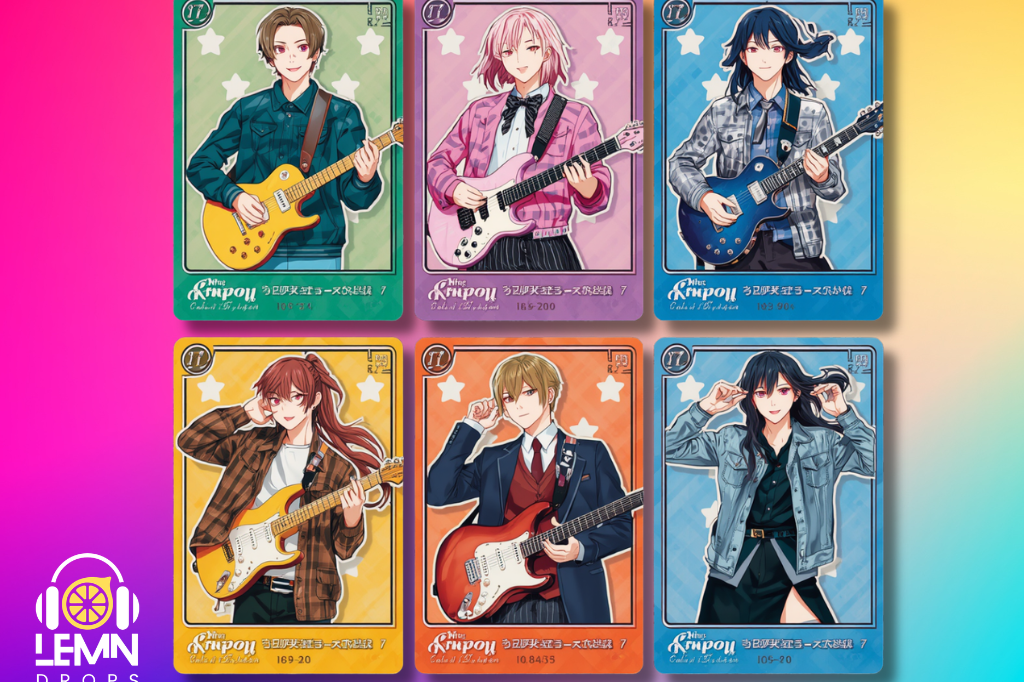
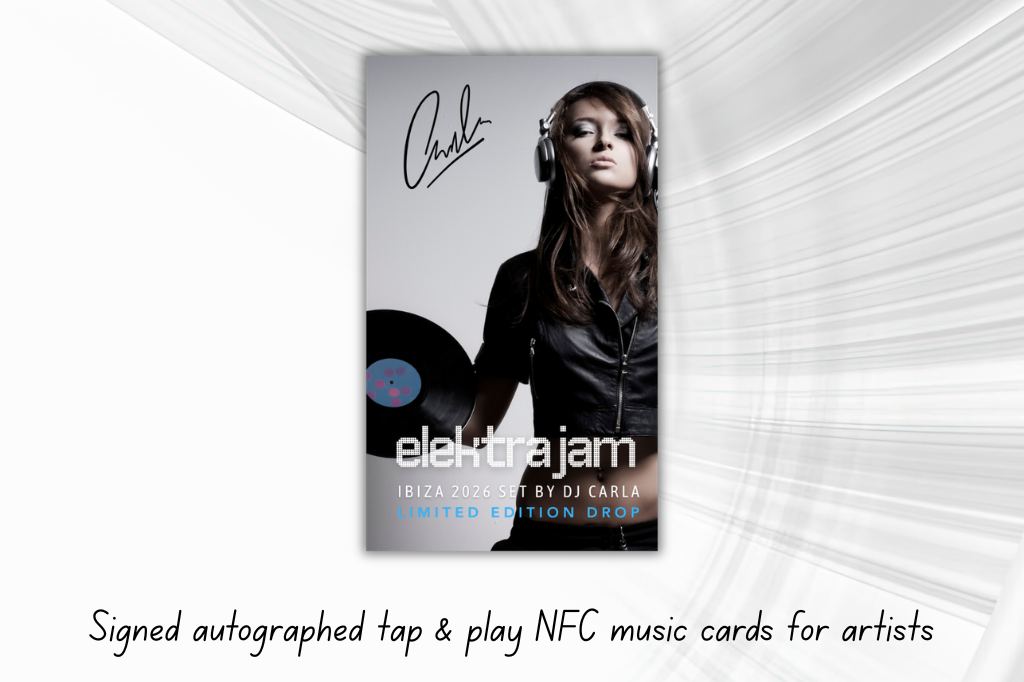
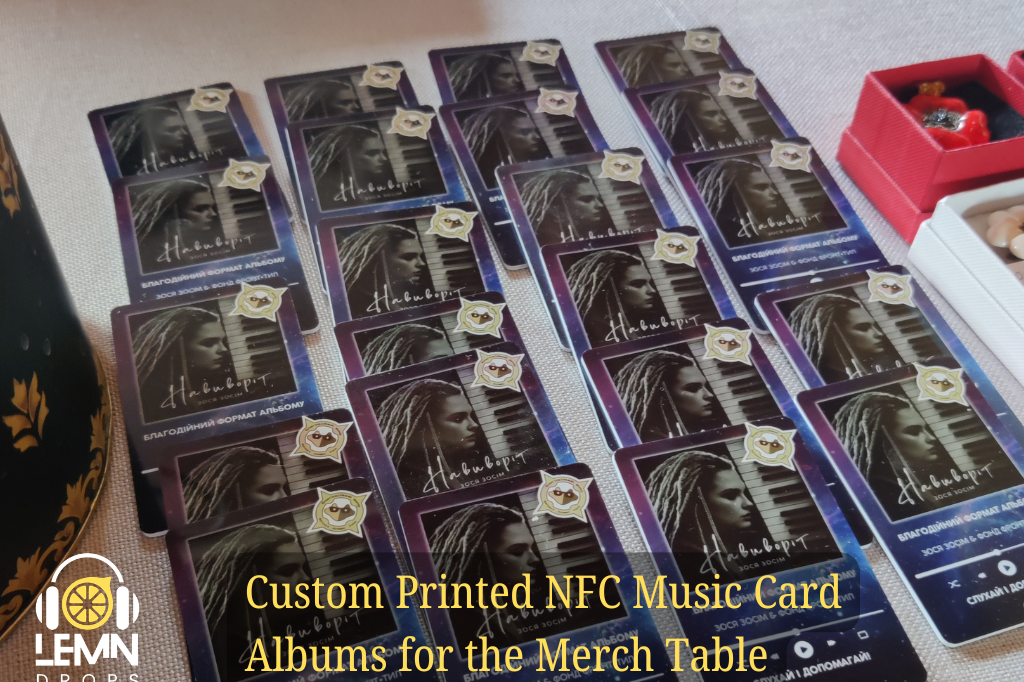
A growing number of independent artists are now selling NFC music cards — a credit-card-sized physical product that fans tap with their phone to instantly access your music, videos, exclusive content, and more. No app required. No CD player required. Just a tap.
For artists releasing through LEMN Drops, this is exactly what a phygital music release enables. You get a beautifully designed physical card — something a fan actually wants to hold and keep — that bridges your physical presence at the show with your digital music release. It’s collectible, gig-ready, and genuinely modern.
The advantages at a gig are significant:
- Lightweight and compact — A stack of 50 NFC music cards takes up less space than a single roll of t-shirts.
- No format barrier — Every fan with a smartphone can use it. No CD player, no Wi-Fi, no downloads needed.
- Higher perceived value than a CD — It feels premium, innovative, and exclusive. Fans who tap it at the table before buying have a moment of genuine delight.
- Built-in storytelling — The card can link to your music, a personal message, your tour dates, your social channels, or anything you want. It’s not just a product — it’s an experience.
- A conversation starter — Nothing kills momentum at a merch table like a fan picking up a generic CD they’ve seen a hundred times. An NFC card that does something when you tap it? That’s a conversation. That’s a sale.
Step 3: Price Your Merch for Maximum Revenue
A common mistake independent artists make is underpricing their merch out of insecurity. You worry that fans won’t pay $35 for a shirt, so you price it at $20 — and leave nearly half the revenue on the table.
Fans who love you will pay for quality. Underpricing your merch doesn’t make you more likeable; it just makes you less profitable.
A solid pricing ladder for a gig merch table:
| Item | Suggested Price |
| Sticker / Pin | $3–5 |
| Poster (unsigned) | $10–15 |
| Poster (signed) | $20–25 |
| T-Shirt | $30–35 |
| Hat / Beanie | $25–30 |
| NFC Music Card / Physical Release | $15–25 |
| Hoodie | $45–55 |
| Bundle (shirt + music card + sticker) | $40–50 |
Bundles are your highest revenue-per-transaction product. A fan who was going to spend $30 on a shirt can easily spend $45 on a bundle that feels like a deal, even though your margin is better. Always have at least one bundle clearly signed at the table.
Signed items command a significant premium. If you’re able to spend five minutes signing stock before the show, a signed poster or card at $5–10 more than the standard price will move well.
Step 4: Set Up a Merch Table That Actually Converts
The merch table is a retail environment, and retail psychology applies. A disorganised pile of t-shirts in the dark corner of a venue will sell a fraction of what a well-presented table sells.
Visibility is everything. Position your table where people naturally flow after the show — near the exit, near the bar, or anywhere foot traffic passes. If you’re playing a venue where you don’t control placement, arrive early and negotiate. Ask to be away from the coatroom queue and anywhere that creates congestion.
Light it up. Most venue corners are dark. A small, battery-powered clip lamp or LED strip can transform your table from invisible to inviting. It’s a $15 investment that pays for itself at one show.
Display shirts on the wall, not the table. Shirts folded in piles look like a car boot sale. Iron one of each design, hang them at eye level if possible, or use a small portable rail. Fans need to see what the shirt looks like on.
Prices should be clearly visible. If a fan has to ask the price, you’ve already created friction. A clean, handwritten or printed price sign removes the awkward “how much is this?” moment and speeds up transactions.
Keep it clean and uncluttered. Three to five product types displayed well outsells ten products displayed badly every time.
Step 5: Accept Every Payment Method
This one is non-negotiable in 2026: if you only accept cash at your merch table, you are leaving money behind. A significant portion of your potential buyers won’t have cash, and they won’t seek out an ATM for you.
What you need:
- A card reader — Square is the most popular option for independent artists. It connects to your phone, takes a small percentage per transaction, and works everywhere. SumUp is a solid alternative, particularly in Europe.
- Contactless payments — Apple Pay, Google Pay, and tap-to-pay cards are now how most people pay. Make sure your card reader supports these.
- Cash backup — Have a float of small bills and coins. Some fans still pay cash, especially at grassroots venues.
At outdoor shows or festivals where signal can be unreliable, check your data connection before the show. Have a backup plan — some artists take cash-only as a last resort, but the default should always be card-first.
Step 6: Staff Your Table (If You Can)
You just played a 45-minute set. You’re sweaty, buzzing, and people want to talk to you. Running your own merch table simultaneously is a recipe for missed sales, awkward transactions, and a worse fan experience all round.
If you can bring one person to run the table — a bandmate, a friend, a partner — do it. Their job is simple: greet people, explain the products, handle transactions, and keep the table organised. You can circulate, meet fans, sign things, and occasionally appear at the table as an event rather than a sales clerk.
Brief your table person before the show: know the prices, know how the bundles work, know what’s in stock. A confident, friendly person at the table converts significantly better than a confused one.
Step 7: Mention Your Merch From the Stage
Artists often forget the most powerful merch sales tool they have: the microphone.
You don’t have to be salesy about it. A simple, genuine mention at the right moment — “We’ve got some limited-edition cards at the back if you want to take the music home with you tonight” — planted two or three times during your set does more for table traffic than any display setup.
The best timing:
- Mid-set — When the crowd is warm and engaged, before they’ve mentally started thinking about leaving.
- Before your last song — “We’ll be at the merch table after this one — come say hello.”
- When introducing something new — “We just put out a new release — you can grab it at the back.”
Keep it short, warm, and natural. You’re not a TV shopping channel presenter. You’re just letting people know the option exists.
Step 8: Know Your Venue’s Merch Policy Before the Show
This is something too many independent artists discover too late: some venues take a cut of your merch sales.
Venue merch cuts vary widely. Larger venues and mid-capacity rooms often charge anywhere from 10–20% of your merch revenue. Many grassroots and independent venues — particularly in the UK following advocacy campaigns from the Featured Artists Coalition — charge nothing at all.
Before every show, ask these questions when confirming your booking:
- Does the venue charge a merch cut?
- If so, what percentage, and does it apply to all items or just apparel?
- Do they provide a merch seller, or do you need to bring your own?
- Where can you position your merch table?
If a venue charges a cut, factor it into your pricing and expectations. If you’re playing a larger venue and the cut is significant, it’s entirely reasonable to negotiate — especially if you’re drawing the crowd.
One practical note: physical music (CDs, vinyl, NFC music cards) is often treated differently to soft merch (apparel) in venue merch policies, with some venues only charging cuts on the latter. It’s worth clarifying which category your physical releases fall into.
Step 9: Capture Fan Details at the Table
Every fan who buys from your table is a verified, qualified supporter of your music. Don’t let them disappear without a way to reach them again.
A simple email sign-up — a physical sheet, a tablet with a Google Form, or a QR code linking to a Mailchimp form — turns a one-time transaction into a long-term relationship. Offer something in return: a discount code for your online store, an exclusive track, early access to your next release.
Your email list is the one audience you own outright. Not subject to algorithm changes, not dependent on a platform’s policies. A list of even a few hundred real fans who’ve bought from you is worth more than tens of thousands of social followers.
Step 10: Track What Sells and Iterate
After every show, count your inventory. Know exactly what sold, in what quantities, and what didn’t move. This sounds tedious, but it’s the difference between artists who build a profitable merch operation and those who guess.
Track:
- Units sold per item
- Revenue per item
- Which items sold out first
- Which items you carried home untouched
Over several shows, patterns emerge. Maybe hats sell better than you expected. Maybe your most expensive shirt design barely moves but the simpler one sells out every time. Maybe your physical music sells best when you mention it from stage and barely at all when you don’t.
Use that data. Order more of what works. Retire what doesn’t. Adjust your prices. Refine your bundle.
The Bottom Line: Treat Your Merch Table Like a Business
Here’s the mindset shift that separates independent artists who profit from their live shows from those who just break even: the merch table is not an afterthought. It’s a revenue centre that you design, manage, and optimise — the same way you’d approach any other part of your music career.
The artists who do this well share a few traits: they invest in how their table looks, they stay current with what fans actually want to buy, they make payment effortless, they mention their products from stage, and they track what works.
And increasingly, the ones pulling ahead are also rethinking what “physical music” looks like. NFC music cards have changed the conversation at the merch table — not because they’re gimmicky, but because they genuinely solve the problem that CDs couldn’t anymore. They’re something fans want to hold, something that works with the phones already in their pockets, and something that connects the live experience directly to your music.
If you’re an independent artist building your live merch operation from scratch — or rebuilding one that’s been coasting — LEMN Drops gives you the tools to create a physical music release designed for exactly this moment.
Want to learn more about how phygital music releases work at live shows? Read our guide on How to Sell Your Music at Live Events as a Phygital Music Drop.
Or explore what an NFC Music Card actually looks like at LEMN Drops.