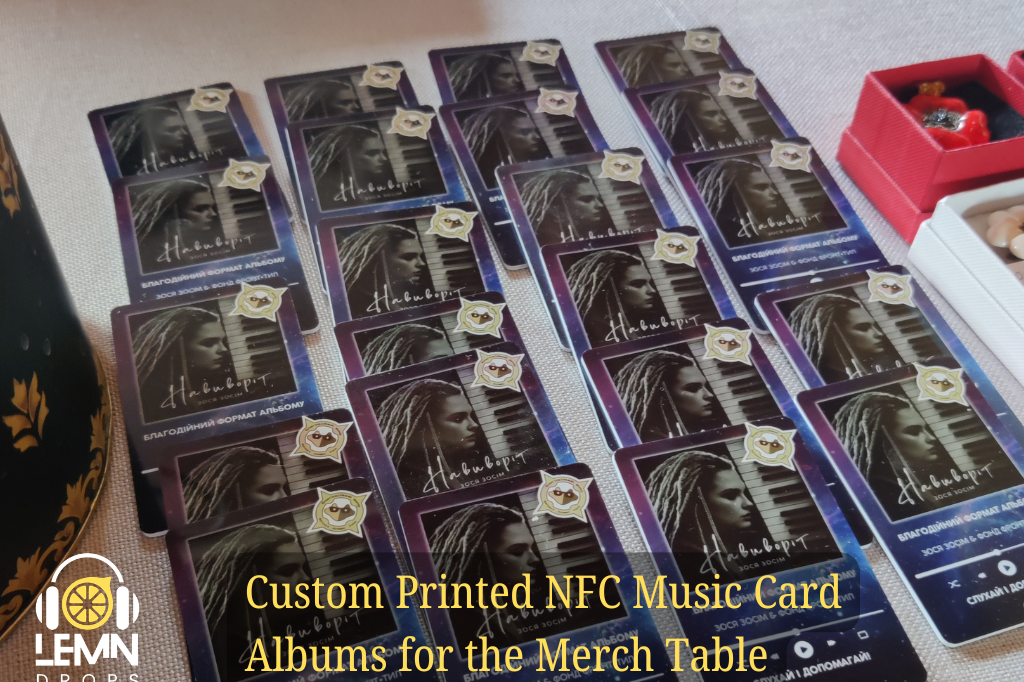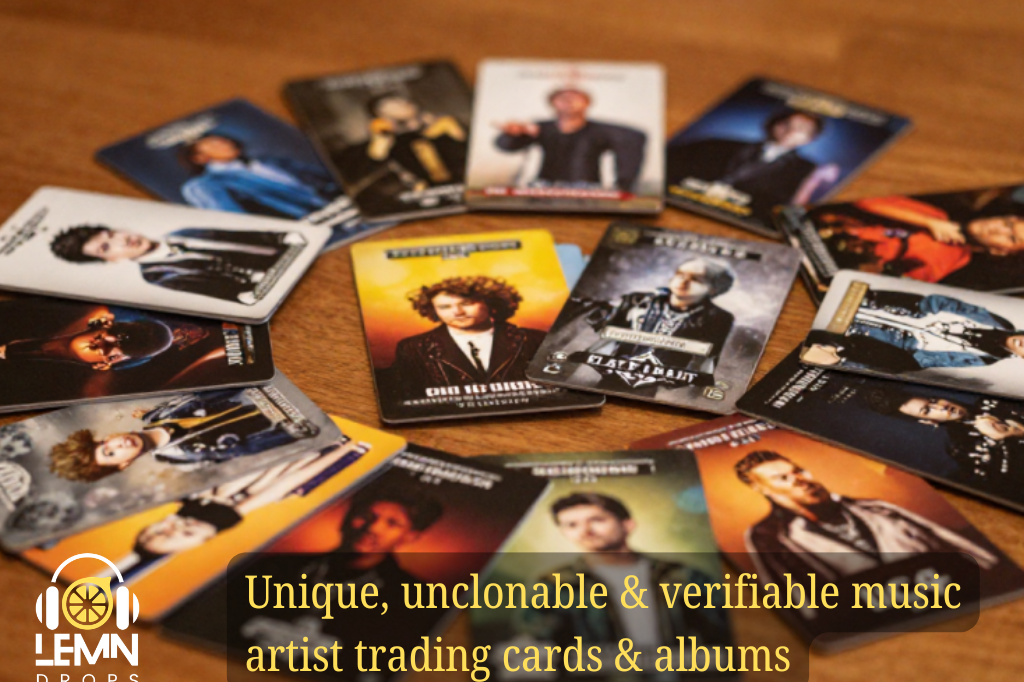


This guide breaks down how to sell autographed vinyl, signed CDs, and signed band merchandise at live shows, and why more independent artists are adding signed NFC tap-and-play music cards to their merch table instead of, or alongside, traditional formats.
If you’re an independent musician, you already know that signed merchandise is one of the most powerful ways to turn a casual listener into a lifelong fan. A personal autograph transforms an ordinary purchase into a keepsake. But when it comes to actually selling signed music at gigs, artists are stuck choosing between formats that were built for a different era — and a newer option that was built for how fans actually listen today.
Why Signed Music Memorabilia Still Sells
Autographed music memorabilia has never gone out of style. Whether it’s a signed album cover, an autographed vinyl record, or a signed setlist, fans are willing to pay a premium for something that proves a direct connection to the artist. A few reasons this category keeps performing at merch tables and online:
- Scarcity — a signature makes every copy one-of-one
- Authenticity — fans want proof they interacted with the real artist, not a poster
- Display value — signed vinyl and art cards often get framed or displayed, keeping the artist visible in a fan’s home long after the show
- Story value — fans love telling the story of how they got something signed
If you’re building a merch strategy around this, the good news is you don’t have to pick just one format. But it’s worth understanding the real tradeoffs between them.
The Traditional Route: Selling Signed CDs and Vinyl at Shows
Signed CDs and autographed vinyl records remain a classic for a reason — they’re tangible, nostalgic, and instantly recognizable as “real” memorabilia. If you’re going this route, a few practical tips:
- Sign in front of the fan when possible. Watching an autograph happen adds more perceived value than a pre-signed stack.
- Number limited runs. “12 of 100” signed vinyl sells faster than an unnumbered pressing.
- Bundle formats. Pairing a signed album cover with a download code can offset the fact that many fans no longer own a CD or turntable.
- Price for the format, not just the signature. Vinyl pressing costs are high, so margins on signed vinyl are often thinner than artists expect once packaging and shipping are factored in.
The catch: CD players and turntables are a shrinking part of how people actually consume music. A signed CD is a beautiful object, but for a growing share of your audience, it’s a keepsake they can’t play — which limits how often it gets picked up, shared, or shown to friends.
The Modern Alternative: Signed NFC Tap & Play Music Cards
This is where LEMN Drops comes in. Instead of a signed disc or record that fans may not have the hardware to play, LEMN Drops NFC music cards let artists sign a physical, collectible card that fans simply tap with their phone to instantly stream the album — no app, no player, no adapter needed.
Here’s why signed NFC cards are becoming a serious alternative to signed vinyl and CDs for independent artists selling merch at live shows:
1. Every fan can actually play it
A phone is the one piece of playback hardware almost every fan already has in their pocket. Unlike vinyl or CDs, a signed LEMN Drops card doesn’t require the fan to own specialized equipment — they tap, and the music plays. That means your signed memorabilia reaches a wider audience: casual fans, younger listeners, and anyone who’s gone all-in on streaming still gets the full experience.
2. Lower entry cost, higher margin
Vinyl pressing runs and CD duplication both carry meaningful upfront production costs before you’ve sold a single unit — and that’s before factoring in the added cost of secure packaging for a signed collectible. NFC music cards are dramatically cheaper to produce per unit, which means:
- Lower upfront investment to create a signed limited run
- Lower breakeven point per show
- Significantly higher margin per card sold at typical gig pricing
For independent artists trying to make merch tables actually profitable — not just break even — this difference matters.
3. Built-in authenticity
Counterfeit and misattributed autographs are a real problem in music memorabilia. LEMN Drops cards use encrypted NFC chip technology, so each card can carry a layer of digital authenticity that a signed CD or vinyl sleeve simply can’t replicate on its own. Combined with your physical signature, that’s a stronger authenticity story to tell fans than an autograph alone.
4. Compact and easy to sell at scale
A box of 50 signed LEMN Drops cards takes up a fraction of the table space and weight of a comparable run of signed vinyl. That makes them easier to travel with, restock, and sell in higher volumes across a tour — without the shipping and freight headaches that come with vinyl.
5. Artists keep 100% of the resale revenue
Unlike streaming royalties split across platforms and distributors, when a fan buys a signed LEMN Drops card directly from an artist at a show, the artist keeps the full sale price. It’s a direct-to-fan revenue model that autographed vinyl and CDs can also offer — but at a lower cost basis and higher margin per unit.
Signed Vinyl vs. Signed CDs vs. Signed NFC Cards: Quick Comparison
| Signed Vinyl | Signed CD | Signed NFC Music Card (LEMN Drops) | |
| Playback requires special hardware | Yes (turntable) | Yes (CD player) | No (any smartphone) |
| Typical production cost per unit | High | Moderate | Low |
| Merch table footprint | Large | Moderate | Minimal |
| Built-in authentication | No | No | Yes (encrypted NFC chip) |
| Artist keeps revenue | Yes | Yes | Yes (100%) |
| Audience reach at point of sale | Collectors with a turntable | Collectors with a CD player | Any fan with a phone |
Building a Merch Table That Sells Signed Music
Whether you stick with signed vinyl, add signed CDs, or bring in NFC tap-and-play cards, a few merch table fundamentals apply across formats:
- Make the signing visible. A fan watching you sign their card or record in real time is part of what they’re paying for.
- Price for perceived value, not just cost. Signed items can typically sell for several times the cost of an unsigned copy.
- Keep a mix of formats if your budget allows. Some collectors will always want vinyl. But adding a lower-cost, higher-margin option like signed NFC cards means you’re not leaving sales on the table with fans who don’t own a player.
- Tell the story on the card itself. A short note, a show date, or a numbered edition adds collectible value beyond the signature.
Getting Started with Signed LEMN Drops Cards
LEMN Drops was built by musicians, for musicians, based on the real experience of selling self-produced music at gigs. If you’re looking for a way to offer fans a personal, signed keepsake that they can actually play — without the production costs and hardware limitations of vinyl or CDs — a custom pack of NFC tap-and-play cards is worth adding to your merch lineup.
Learn more about LEMN Drops NFC music cards and start selling signed, playable music at your next show.