

The music album card – there is something deeply human about wanting to hold music in your hands.
Not just hear it. Not just stream it from a cloud somewhere. But actually hold it — turn it over, look at the artwork, read the credits, feel the weight of it. Own it, in the truest sense of the word.
This impulse has driven the physical music industry for over a century. It survived the transition from shellac to vinyl. It survived the arrival of the cassette. It outlasted predictions that the CD would be the last physical format anyone would ever need. And today, as streaming reaches its logical conclusion — infinite music, zero ownership, fractions of a cent returning to the people who made it — that same impulse is driving a new generation of listeners and artists toward physical music all over again.
The question is not whether physical music has a future. The data is clear: it does, and it is growing. The question is what form that future takes.
This is the story of how physical music has evolved across a century of formats — and why the music album card is the format that makes the most sense for the generation that grew up with a smartphone in their pocket.
Vinyl: Where Physical Music Found Its Soul
The vinyl record is where the physical music experience as we know it was born.
The 12-inch LP arrived in 1948 and spent the next three decades as the definitive format for serious music listening. Everything about it was intentional and considered: the large-format sleeve that gave artists a 12-inch square canvas for artwork and photography, the liner notes that filled every inch of the inner sleeve with credits and stories, the ritual of carefully removing the record from its sleeve, placing it on the turntable, and lowering the needle.
Vinyl demanded attention. You could not passively consume a vinyl record the way you passively consume a playlist. The format itself required presence — the act of listening was deliberate, unhurried, complete. Side A, then flip, then Side B. The album as a unified artistic statement, experienced from beginning to end as the artist intended.
This is why vinyl has never truly died. US vinyl unit sales reached 47.9 million in 2025, growing 8.6% year-over-year, with independent artists driving much of the growth — average vinyl order quantities per independent artist grew 41% in the first half of 2025 alone.
But vinyl has always had limitations that kept it out of reach for many independent artists and many listening contexts. A 12-inch record is fragile, heavy, and requires specialist equipment to play. Pressing costs for small independent runs remain significant. Lead times at pressing plants can stretch to months. And the format, for all its beauty, has never been portable in any practical sense — you cannot carry a vinyl record to work, to the gym, or on a commute.
Vinyl solved the experience problem. It never solved the portability problem.
The Cassette: Physical Music Goes Portable
The compact cassette, developed by Philips in 1962 and popularised through the 1970s and 1980s, solved the portability problem that vinyl could not.
The cassette was the first physical music format that went where you went. The Sony Walkman, launched in 1979, fundamentally changed how people related to music — for the first time, your personal soundtrack could accompany you through the world rather than anchoring you to a room with a turntable. Music became mobile. Listening became individual. The cassette slipped into a jacket pocket, a bag, a glove compartment. It was robust enough to survive daily life in a way that vinyl never was.
The cassette also democratised music production. Home taping made it possible for artists without label support to record and distribute their own music — the original DIY music format. The punk and indie underground ran on cassettes throughout the late 1970s and 1980s. Artists dubbed tapes by hand, designed photocopied inlays, and sold them at shows or mailed them to fans directly. The music album on cassette was the first format that truly put distribution in the hands of independent artists.
Cassettes are experiencing a genuine revival today, particularly in independent and underground music scenes. The resurgence of physical media shows no signs of slowing, with fans increasingly feeling the absence of a tangible product — and independent artists have recognised this desire, offering physical releases with beautiful packaging and exclusive content.
But the cassette has a fundamental problem in 2025: virtually nobody owns a cassette player. The format’s revival is real but niche, and the playback barrier — the requirement for specialist hardware that most people do not possess and most environments do not accommodate — limits its reach to a dedicated subculture rather than a mainstream audience.
The cassette solved portability. It introduced DIY distribution. But it tied playback to hardware that the majority of today’s music listeners simply do not have.
The CD: Physical Music Goes Digital
The compact disc, launched commercially in 1982, was the first physical music format to deliver digital audio. Crystal-clear sound, no surface noise, no degradation from repeated plays, skip-resistant in its later incarnations. The CD seemed, at the time, like the format to end all formats — so advanced that the industry genuinely believed it had created the final answer to how music would be sold and played.
For roughly 15 years, it was right. CD sales peaked at over 2.4 billion units globally in 2000. Every car had a CD player. Every home had a CD player. Music retail was built around the CD. The jewel case became as familiar an object as a paperback book.
And then the internet arrived.
The CD’s fatal weakness was that its digital audio was trivially easy to copy. A CD ripped to MP3 in minutes, and those files could be shared with anyone on the planet instantly. The format that was meant to be the final answer became the first casualty of digital disruption. By the early 2010s, CD sales had collapsed. By the 2020s, most laptops had stopped including optical drives entirely.
Yet here is the interesting twist: CDs are coming back. Industry experts believe CDs will become increasingly popular, even “cooler” with younger generations — both artists and fans are starting to realise what a great option CDs are, with some noting that CDs are actually the purest form of digital music. Gen Z is rediscovering the format with fresh eyes, unburdened by the cultural baggage of the Napster era. For them, a CD is not a relic — it is a physical artefact, affordable to produce, easy to carry, and genuinely collectible.
But the playback problem remains. CD players are not in most people’s daily lives. You can slip a CD in your jacket pocket, but you cannot play it there.
The CD solved digital audio quality and mainstream distribution. It could not survive the transition to a world where the playback hardware disappeared.
The Gap: What No Format Has Fully Solved
Looking across the history of physical music formats, a pattern emerges. Each format solved some problems and introduced new ones.
Vinyl: Unmatched listening experience and artwork canvas. Not portable. Requires specialist equipment.
Cassette: Portable. DIY-friendly. Requires playback hardware almost nobody owns anymore.
CD: Affordable to produce. Familiar to most people. Requires playback hardware that has largely disappeared from daily life.
Every physical music format in history has required the fan to own and operate separate, dedicated playback hardware. And the problem that the streaming era revealed is not that people do not want to listen to music — they listen to more music than ever. It is that the hardware they actually use to listen to music is a smartphone.
The ideal physical music format for 2025 would be:
- Affordable to produce in small independent runs
- Portable — genuinely pocketable, durable enough for daily life
- Collectible — with a form factor that invites display, curation, and personal connection
- Playable on the device people already carry — without requiring any additional hardware, app download, or account creation
- Secure — so the music cannot be copied and distributed freely beyond the physical object
- Beautiful — with a canvas for artwork that does justice to the music it carries
No format before the music album card has ticked all of these boxes simultaneously.
The Music Album Card: Physical Music for the Smartphone Generation
The music album card is a credit-card-sized, custom-printed NFC card that gives the holder instant access to a digital music album when tapped against any NFC-enabled smartphone.
It is, in every meaningful sense, the physical music format that the current generation has been waiting for — even if they did not know to ask for it.
Here is what makes it different from every format that came before.
It Plays on the Device Everyone Already Owns
The music album card does not require a turntable, a cassette deck, a CD player, or a dedicated music player of any kind. It requires a smartphone — the device that virtually every person on the planet already carries, uses daily, and listens to music on already.
Tap the card to your phone. Your music opens in the browser, instantly, with no app to download and no account to create. The playback hardware problem that has plagued every previous physical format is solved by the fact that the hardware is already in everyone’s pocket.
This is not a small thing. It is the single most important distinction between the music album card and every format that preceded it. Previous formats required you to own and carry the right playback equipment. The music album card requires you to own and carry a smartphone — which you already do.
It Is the Most Portable Physical Music Format Ever Made
A music album card is the size of a bank card and weighs almost nothing. It fits in any wallet, any card holder, any jacket pocket. You can carry your entire music collection in the same wallet where you keep your payment cards.
Compare this to vinyl — impossible to carry casually. To cassettes — pocketable but player-dependent. To CDs — pocketable but fragile and player-dependent. The music album card is the first physical music format that is genuinely, effortlessly portable in the same way that the music itself has become since streaming.
It Is Built for Collecting — Like Cards Have Always Been
This is perhaps the most underappreciated dimension of the music album card format: it inherits one of the most powerful and enduring consumer behaviours in modern culture.
People collect cards.
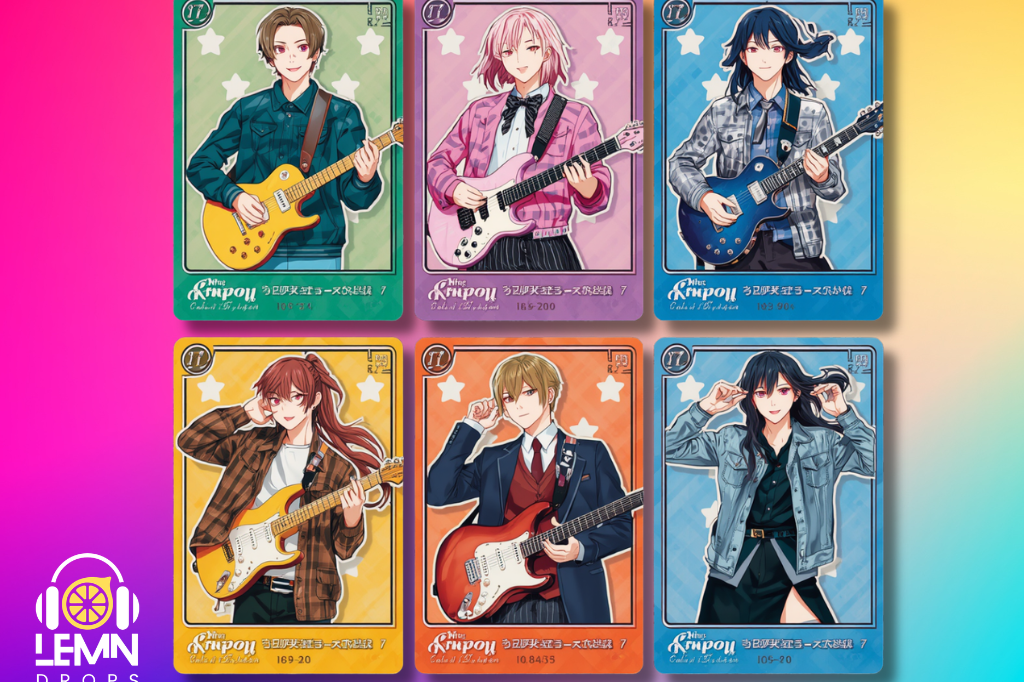
Pokémon cards. Baseball cards. Football stickers. Magic: The Gathering. Trading cards of every description have been collected, sorted, displayed, traded, and treasured by multiple generations across multiple cultures. The card as a physical object has a deep, culturally embedded relationship with collecting, curation, and personal identity. Carrying your favourite cards says something about who you are. Displaying a collection says something about what you value.
The music album card slots into this behaviour naturally and completely.
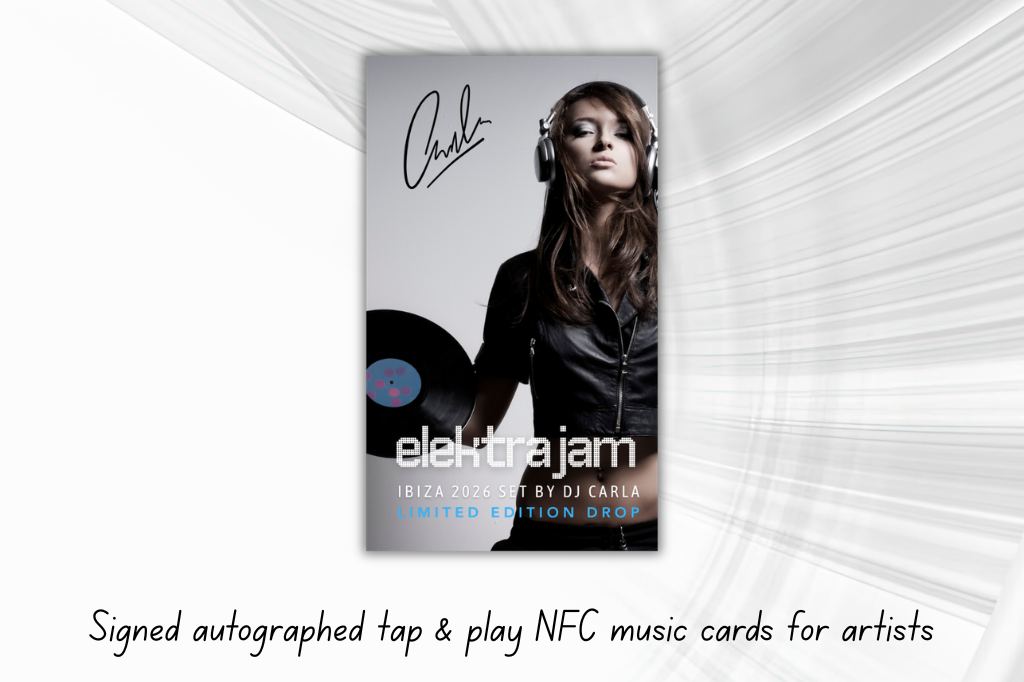
A limited edition NFC music album card from your favourite independent artist, numbered 1 of 50 and signed by hand, has the same collector’s appeal as a rare Pokémon card — but it also plays music. A carefully curated set of album cards from artists you love is not just a music collection. It is a physical expression of musical identity, displayable, giftable, tradeable, and deeply personal in the way that streaming playlists will never be.
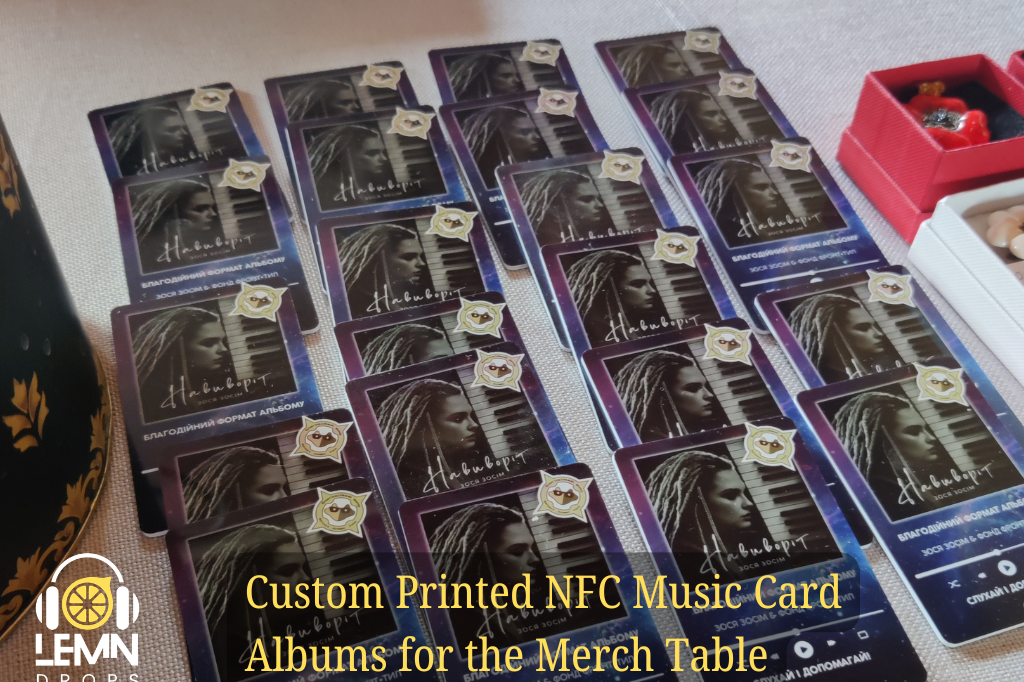
The card form factor is also ideal for the merch table. At a gig, a festival, or a fan meetup, a stack of custom-printed album cards is visually striking, immediately intriguing, and easy to display alongside t-shirts, posters, and other merchandise. Fans who connect with the music at a live show can pick up a card, turn it over, admire the artwork, and tap it on their phone to hear the music play — all within 30 seconds, with no instructions required.
The Artwork Canvas — Small But Mighty
Vinyl lovers will always point to the 12-inch sleeve as the definitive canvas for music artwork. And they are right that scale has its own power. But the music album card makes a compelling argument that great design does not require large format.
A credit-card-sized canvas, printed in full colour on both sides, with artwork that is held in the hand and examined up close rather than viewed across a room, creates an intimacy that larger formats cannot replicate. Album artwork on a card is designed to be handled — turned over, studied, held up to the light. It rewards attention in the way that great miniature art always has.
Custom printing means every LEMN Drop card is unique to the artist and the release. Your artwork, your typography, your visual identity, printed on a physical object that fans will hold, display, and keep.
Security That No Previous Format Had
Every previous physical music format was trivially easy to copy and redistribute. Vinyl could be ripped. Cassettes could be dubbed. CDs could be copied to a computer in minutes and shared with anyone.
The music album card, built on NFC authentication technology, is a different proposition entirely. Each LEMN Drop card uses an NXP NTAG 424 DNA chip — the same unclonable authentication technology used in modern banking and secure access systems. Every card contains a unique, encrypted access link that cannot be replicated, copied, or shared without the original physical card. The music is tied to the object, not just associated with it.
This matters for the artist because it means every card sale represents a genuine, non-replicable unit of value — just as a vinyl record once did. It matters for the collector because it confirms the authenticity and uniqueness of what they own.
New Formats Are Emerging — But the Card Form Factor Wins
The music album card is not the only new physical music format attempting to bridge the gap between physical ownership and digital listening. The broader industry is seeing growing interest in SMART formats that blend physical products with bonus digital content, with 2025 seeing artists truly begin to embrace this physical-digital fusion.
NFC-enabled mini discs, smart vinyl stickers, NFC posters, and other hybrid formats have all appeared in various corners of the market. Each has its own appeal. But the card form factor has several structural advantages over all of them.
Versus NFC mini discs: A disc requires more packaging, is less pocketable, and does not benefit from the deep cultural association with card collecting. It also has no natural home at a merch table or in a wallet.
Versus NFC stickers on existing formats: Stickers applied to vinyl or CD packaging extend an existing format but inherit all of its limitations — the vinyl still requires a turntable, the CD still requires a player. The NFC element is an add-on rather than the foundation.
Versus NFC wristbands and festival formats: These are event-specific and disposable by nature. They do not lend themselves to permanent collection or repeated use.
Versus QR code cards: QR cards are inexpensive but insecure — a QR code can be photographed and shared with anyone, instantly making the music freely available to anyone who receives the image. The NFC authentication in a music album card means the music is genuinely tied to the physical object.
The card wins on portability, security, collectibility, cultural resonance, and compatibility with existing behaviour. It is not the flashiest format — it is the most practical one. And in the history of physical music formats, practicality is what determines which formats survive.
The Generational Fit: Why This Format Resonates Now
There is a specific reason the music album card is arriving at this moment rather than ten years ago or ten years from now.
The generation that is currently coming of age as music buyers — broadly Gen Z, born between the mid-1990s and early 2010s — has a unique relationship with both physical objects and digital experiences. They grew up with smartphones. Streaming is not a novelty to them; it is the default, the background, the unremarkable infrastructure of daily life. But they are also, paradoxically, among the most enthusiastic adopters of physical music. Current data shows 58% of vinyl buyers are aged 18–34, with Gen Z leading the charge — younger customers who view record shops as social destinations.
This generation craves intentionality. In a world of infinite digital content, the act of choosing something physical — of paying for it, owning it, displaying it — is a deliberate counter-cultural statement. Physical music is not retro for them. It is resistance. It is a way of saying that some music matters enough to own.
Gen Z in particular seems to see physical formats as an antidote to the fast-consumerism world they are living in.
The music album card speaks to this impulse directly. It does not ask them to abandon their smartphone or learn a new behaviour. It meets them exactly where they are — tap your phone, hear the music, own the card — while giving them the physical, collectible, intentional ownership experience that streaming will never provide.
What a Music Album Card Release Looks Like in Practice
For an independent artist or band, releasing music as a LEMN Drop NFC music album card is a complete physical release in the most modern sense.
You upload your tracks, artwork, lyrics, artist bio, and credits to the LEMN Drops platform. You order your custom-printed cards — as few or as many as you choose, with your artwork printed on the front face of the card. The back has a holographic print which resembles a record or CD. The cards are encoded with a unique, secure access link and shipped to you, ready to sell.
At your next show, you put them on the merch table. Fans pick them up, examine the artwork, tap their phone, hear your music. They buy a card the way they once bought a CD at the venue — except the card fits in their wallet and plays on the device already in their hand.
The limited edition principle that made coloured vinyl and numbered pressings so collectible applies just as naturally to album cards. A run of 50 hand-numbered, signed cards from a debut EP is a genuine artefact. The fans who own one know they own something rare.
The Next Chapter in a Long Story
The history of physical music is not a story of formats competing with each other. It is a story of formats evolving to meet the needs of listeners and artists in each era — the technology of the time, the hardware of the time, the listening habits of the time.
Vinyl gave music a home and an identity. Cassettes made music mobile and democratic. CDs made music digital and universally accessible. Each format built on what came before, solved the problems of its predecessor, and created new possibilities for how artists and fans could connect.
The music album card is the next chapter in that story.
It is portable in a way that vinyl never was. It plays without specialist hardware in a way that cassettes and CDs never could. It is collectible in a way that streaming will never be. It is secure in a way that no previous format managed. And it lives in a wallet alongside the payment cards and loyalty cards that already define how this generation carries their daily life.
Physical music is not going away. It is finding its form.
Ready to release your music as a collectible NFC music album card?
Visit lemn-drops.com/shop to order your custom-printed LEMN Drop cards and create your first Music Drop.
Have questions? Reach out through lemn-drops.com and our team will guide you through your first release.