

Phygital music release is a trending topic.
Music has always been physical. Vinyl pressed into grooves. Cassette tape wound on a spool. A CD spinning at 200 rotations per minute. For most of recorded music’s history, the format was tangible — something you could hold, display, and own.
Then streaming arrived. And for about a decade, it felt like the physical music distribution format was finished.
It wasn’t. It just needed to evolve.
Enter the phygital music release — a format that bridges the physical and the digital in a way that works for today’s artists and today’s fans. It’s one of the most exciting developments in independent music right now, and it’s growing fast.
Here’s everything you need to know.
What Does “Phygital” Actually Mean?
The word phygital is a blend of physical and digital. In a phygital product, a tangible physical object acts as the key that unlocks a digital experience — often through a tap, scan, or connection.
The concept has taken root in fashion, retail, and gaming, where brands are experimenting with products that exist simultaneously in the real world and online. But music may be the most natural home for it.
A phygital music release gives a fan something they can hold — a card, a badge, a wearable, a collectible object — that, when tapped or scanned, instantly delivers the music, artwork, lyrics, credits and story behind a release. No download required. No app needed. Just a tap with any modern smartphone.
The physical object becomes part of the music experience itself.
Why Independent Artists Are Looking Beyond Streaming
To understand why phygital music releases are gaining traction, it helps to understand what streaming has done — and failed to do — for independent artists.
Streaming platforms democratised distribution. Any artist anywhere can get their music on Spotify, Apple Music or Tidal within 48 hours. That is genuinely significant, and it changed music forever.
But the economics never favoured the independent creator.
The per-stream payout rates across major platforms typically range from a fraction of a cent to around half a cent per stream. For an independent artist without a label absorbing overhead costs, earning a meaningful income from streams alone requires millions of plays. For most musicians, that is simply not realistic.
Meanwhile, the relationship between artist and fan on streaming platforms is mediated by an algorithm. There is no direct transaction, no ownership, no moment of connection. A fan who loves an artist’s album plays it hundreds of times — and the artist earns less than the cost of a cup of coffee.
Independent musicians have always found ways around this. Touring, merchandise, Bandcamp sales, Patreon. But the phygital music release is something new: a format designed from the ground up to give artists a fair, direct revenue model while giving fans something genuinely worth owning.
What Makes a Phygital Music Release Different
A phygital release is not just a download card with a QR code printed on it. The best phygital formats are meaningfully different in three ways.
- The physical object has intrinsic value
A well-designed phygital music card is a collectible in its own right. It carries the artist’s artwork, their visual identity, their name. It’s the kind of thing a fan puts on their desk or in their wallet — not something they throw away after redeeming a download code.
- The digital experience is immediate and frictionless
A fan shouldn’t need to find a password, create an account, or navigate a clunky website. The best phygital formats deliver the music instantly from a tap. That frictionlessness matters: it mirrors the convenience of streaming while restoring the ownership model of physical sales.
- The artist earns from the point of sale
Unlike streaming, where revenue trickles in over months and years at minimal rates, a phygital release generates revenue the moment a fan buys a card. The artist sets the price. The artist keeps the margin. It is a direct, honest transaction.
The Formats Being Used Right Now
Phygital music releases take several forms, each with different strengths.
NFC music cards are among the most polished and scalable options available. Near-field communication (NFC) is the same technology that powers contactless payments — it’s already in every modern smartphone. An NFC chip embedded in a card connects a fan instantly to the music when tapped. No scanning, no QR alignment, no fuss.
QR code cards and download cards are simpler and cheaper to produce, but rely on camera scanning and can feel less premium. They can also break if the linked URL changes or expires.
Limited edition vinyl with digital access is a route taken by some larger independent acts — pairing the warmth and collectibility of vinyl with digital bonuses. It is expensive to produce and logistically heavy.
USB drives and memory cards were a transitional format — they carry files rather than streaming access, which creates compatibility issues across devices.
For independent artists looking for a format that is professional, scalable, affordable and genuinely great for fans, NFC music cards have emerged as the standout choice.
LEMN Drops: An NFC Music Card Format Built by a Musician
LEMN Drops was created by someone who has lived the realities of the modern music industry from the inside — an independent guitarist and songwriter who experienced firsthand what streaming payouts look like when the label isn’t absorbing the loss.
The solution they built combines a decade of professional NFC technology development with a musician’s understanding of what artists actually need: a fair format, beautiful physical product, and a direct path to earning from music.
LEMN stands for Limited Edition Music NFC-Card Drops.
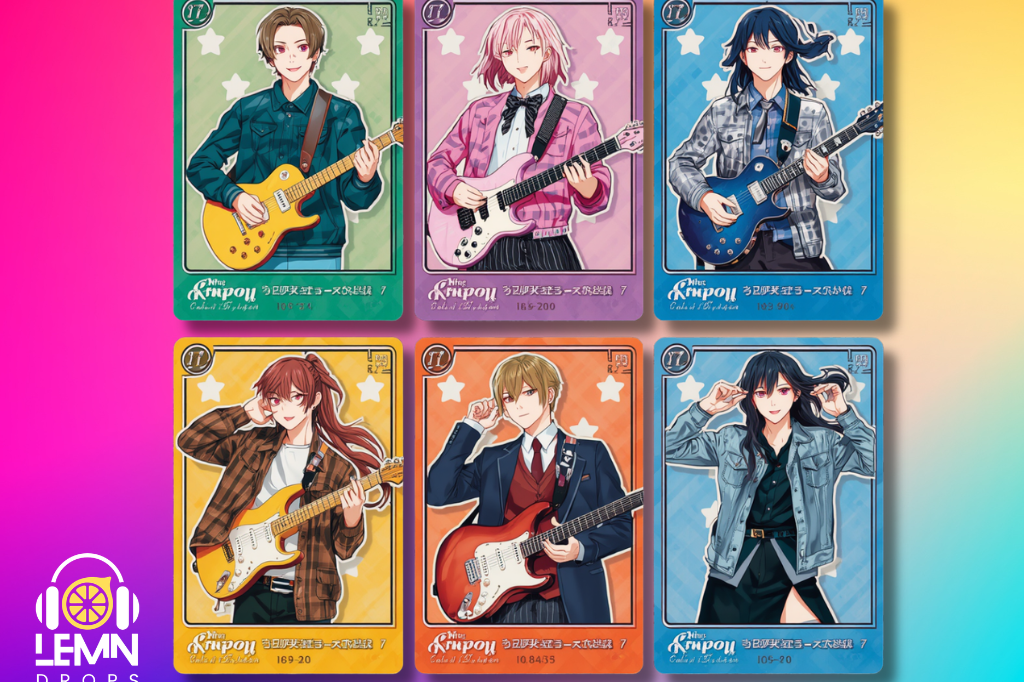
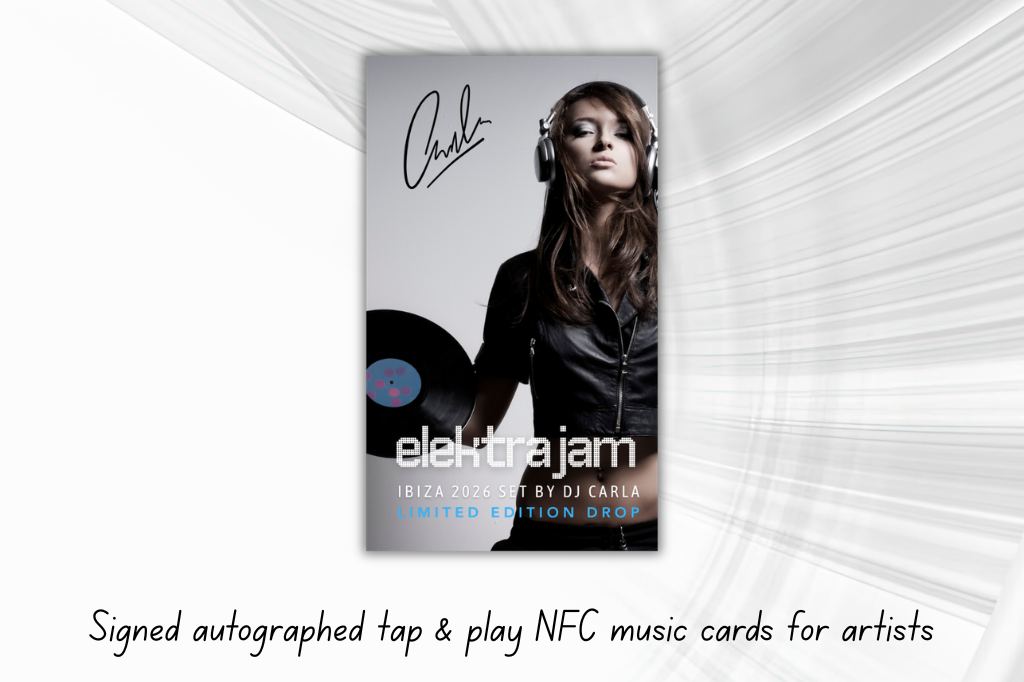
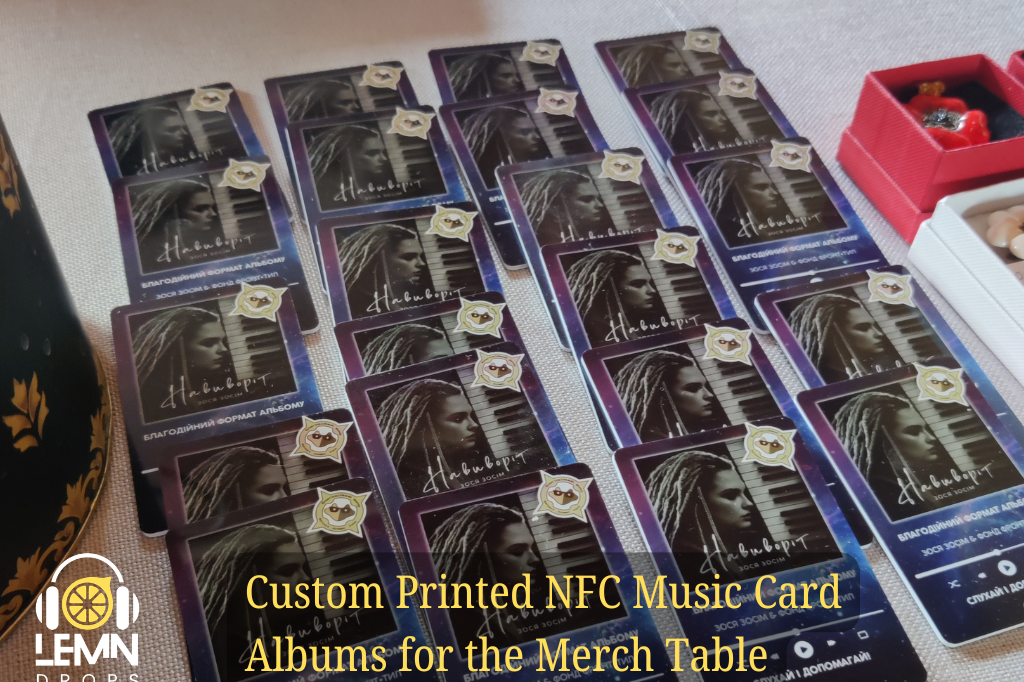
Each LEMN Drop is a custom-printed collectible NFC card — front and back, featuring the artist’s own album artwork and visual identity. When a fan taps the card with their smartphone, they are instantly connected to the artist’s music, release information and digital content. No app required. No login wall. Just tap and play.
Artists order their cards through the LEMN Drops shop, submit their music and artwork through an online form, and LEMN handles the rest — printing, configuring the NFC chips, and delivering the finished cards ready to sell.
Cards are available in boxes of 50, 100, 150 or 200 — making the format accessible whether you’re releasing your first EP or managing a larger release campaign.
What a LEMN Drops Release Looks Like in Practice
Imagine you’re an independent artist releasing a new album. Here’s how a phygital release through LEMN Drops might sit alongside your wider campaign.
You order 100 custom NFC cards printed with your album artwork. You sell them directly at gigs, through your own website, at record fairs, or through a small number of independent shops. Each card sells for whatever price reflects the work — perhaps €10 or €15. That’s real money, from real fans, at the moment of sale.
The fan takes the card home. They tap it, their music plays, they see the artwork, the credits, the story behind the record. The card sits on their shelf. It becomes part of how they relate to that album and to you as an artist.
Meanwhile, you haven’t split revenue with a platform. You haven’t waited for monthly streaming statements. You’ve sold a piece of music the way musicians used to: directly, at a fair price, with something physical changing hands.
Why Fans Are Ready for This
It would be easy to assume that streaming has trained fans out of paying for music. The evidence suggests otherwise.
Vinyl sales have grown for eighteen consecutive years. Cassette sales have returned from near-extinction. The appetite for physical music is clearly not dead — it just needs formats that make sense for a generation that carries their entire music library on a phone, not a turntable.
An NFC music card solves that equation. It’s physical enough to feel like ownership. It’s digital enough to be instantly playable. And it’s small enough to carry in a wallet alongside a bank card.
Fans who are engaged with an artist — who have been to the gigs, followed the journey, cared about the music — are often delighted to have something physical to own. Phygital releases give that to them in a format that works with their lives.
How to Get Started with a Phygital Music Release
If you’re an independent artist, starting with a phygital release is simpler than it might sound.
You don’t need a label. You don’t need a distributor. You don’t need expensive printing equipment or technical knowledge.
With LEMN Drops, the process is:
- Order your cards from the LEMN Drops shop — choose your quantity (50, 100, 150 or 200)
- Submit your music and artwork via an online form after checkout
- Receive your finished cards — custom-printed, NFC-configured and ready to sell
- Sell directly to your fans, at gigs, on your website, or anywhere you choose
There’s no ongoing platform fee eating into your revenue. No algorithm deciding whether your music reaches your audience. Just a professional, beautiful physical format that pays you fairly.
The Bigger Picture
The phygital music release isn’t a niche experiment. It’s a natural evolution — one that draws on everything that made physical music formats beloved (ownership, artwork, collectibility, the ritual of engaging with music deliberately) while removing everything that made them impractical for the streaming generation (bulky hardware, compatibility issues, format obsolescence).
For independent artists, it represents something more fundamental: a return to earning fairly from music.
The streaming era taught us that distribution can be free and universal. The phygital era is adding something that got lost along the way — the idea that a piece of music is worth something. That fans will pay for it. That artists deserve to be paid for it.
LEMN Drops is at the front of that shift. And for independent musicians who are ready to earn from their work on their own terms, the phygital music release is worth looking at seriously.
Ready to release your music as a phygital NFC card?
Browse the LEMN Drops shop and get your custom NFC music cards ordered today.